How to Convert Product Documentation to Marketing Videos with AI
TL;DR
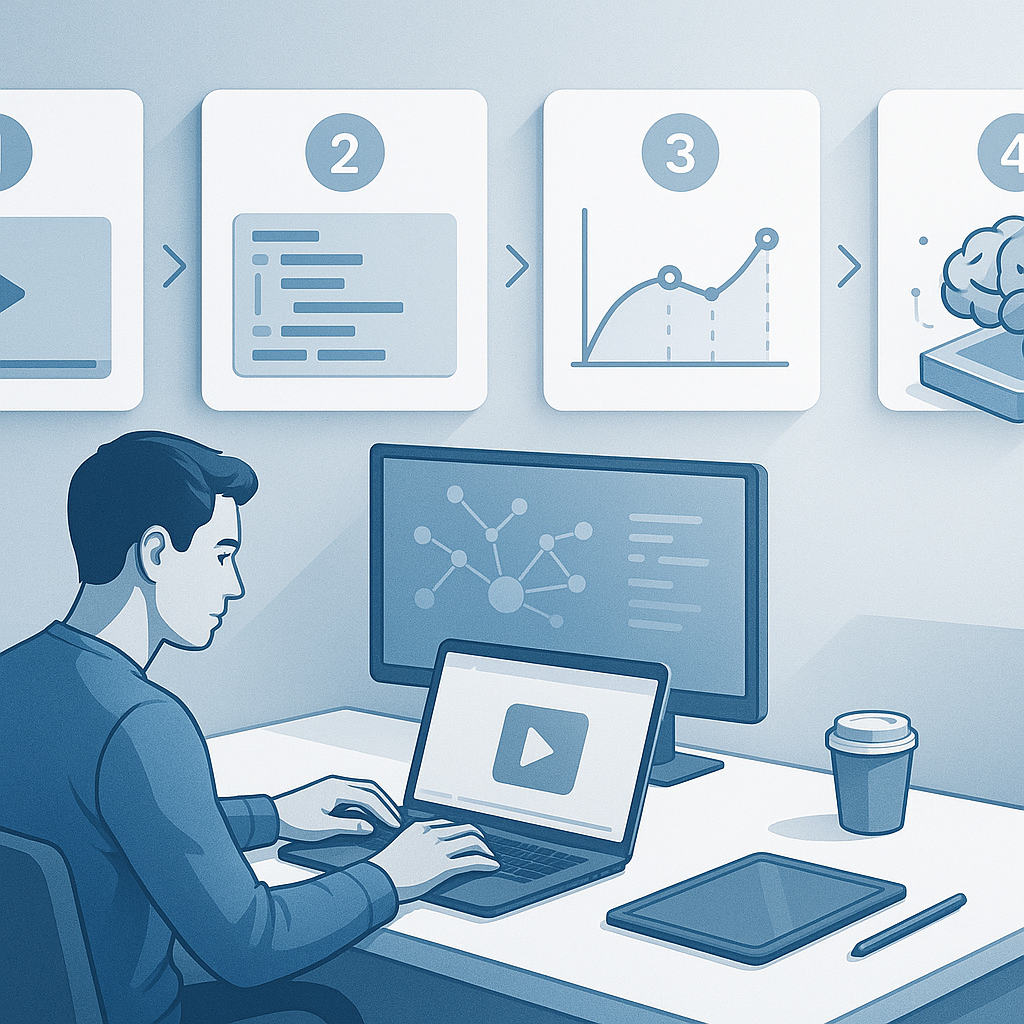
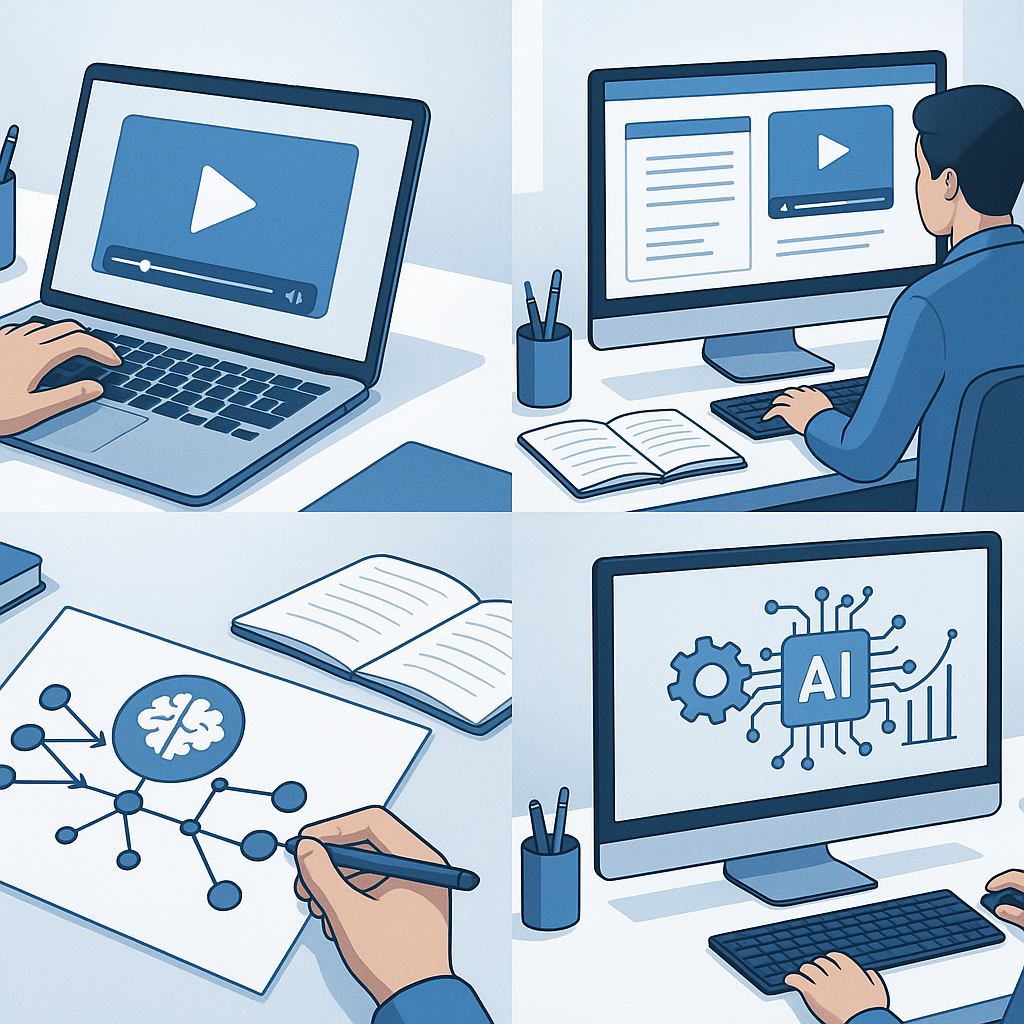
- Turn dense product docs into engaging videos by building a lightweight AI-powered pipeline: extract key messages, craft a compelling script, generate visuals and voiceover, and assemble the final product.
- Use marketing automation to publish variations across channels and keep messaging consistent.
- Start with a small pilot, apply a repeatable process, and scale up as you refine your templates and brand voice.
- Expect faster time-to-market, better viewer retention, and more opportunities to repurpose content across product marketing, onboarding, and support.
Introduction
If you’ve ever tried to translate a thorough product documentation deck into a punchy marketing video, you know the struggle: you’ve got feature lists, architectural diagrams, and caveats all mixed together, but what your audience actually wants is a clear story and a quick path to value. The good news is that AI can bridge this gap without turning your team into full-time video editors.
In many product-led organizations, docs are written for technical readers, support teams, or internal onboarding. Marketing, on the other hand, needs concise narratives, scannable visuals, and a consistent brand voice that resonates across channels. AI-powered workflows allow you to convert documentation ai into marketing videos at scale—without sacrificing accuracy or personality. In this article, I’ll share a practical, step-by-step approach to turn product documentation into high-quality product videos that fuel product marketing, support funnels, and onboarding. You’ll find actionable steps, a ready-to-follow pipeline, and a concrete comparison of tool options to help you choose what fits your team best.
From my experience working with product and marketing teams, the most successful transitions happen when you treat the process like content engineering: define the audience, map the messaging, automate the repetitive parts, and keep a human-in-the-loop for quality and brand guardrails. Let’s dive in.
Main Content Sections
1) From Documentation to Story: Framing the Video Narrative
Before you touch any AI tool, map your docs to a story your audience can follow in 1–3 minutes.
- Identify the core value proposition. What problem does the product solve? What’s the one takeaway you want viewers to have?
- Map to audience segments. A user who’s new to the product vs. a power user or IT buyer will care about different angles (ease of setup vs. advanced features and governance).
- Create a messaging outline. Use a “story arc” that includes a problem, a solution (the product or a feature), proof (data or a short demo), and a clear call to action (learn more, sign up, contact sales).
- Break the docs into micro-narratives. A long guide can become a 60–90 second overview video, several 15–45 second feature clips, and a 30-second social cut. Think modular, not one mega-video.
- Decide on the video format per channel. Short social clips (15–30s) for awareness, 60–90s explainers for landing pages, 2–3 minute tutorials for onboarding.
Practical example:
You’re marketing a new analytics dashboard. From the docs, pull out:
- The one-line value: “Turn raw data into actionable insights in minutes.”
- 3 key features to demonstrate: a) live dashboards, b) anomaly detection, c) shareable reports.
- A quick proof point: “Cut time to insight by 40%.”
Quick note: keep your storytelling tight. If a sentence in the doc is more than 25 words, rewrite it for clarity and pace. Your goal is to be understood in seconds, not minutes.
Pro tip: Build a one-page narrative brief for each video you plan. It should include the audience, the problem, the solution, the assets you’ll show (screenshots, diagrams, avatars), and the tone. This becomes your single source of truth as you move into automation.
From my experience, starting with a pilot doc (one product, one audience segment) helps you calibrate the tone, pacing, and visuals before you scale. Also, don’t ignore accessibility early—captions and descriptive text can be carved into the script from the outset.
2) The AI-Powered Workflow: From Source Docs to Finished Product Videos
This is where you convert the narrative into a polished video, with a repeatable pipeline.
-
Step A: Extract and summarize from documentation ai
- Use an AI model to pull out the essential messages, features, and benefits from your docs. Create a concise outline and bullet points that map to slides or scenes.
- Tip: annotate the output with a “tone” tag (friendly, confident, expert) to guide the rest of the flow.
-
Step B: Script writing and voiceover planning
- Provide the AI with your outline and audience notes to draft a natural-sounding script. Keep sentences short, use plain language, and insert micro-credibility insertions (data points, customer quotes, or benchmarks).
- Quick note: plan the script for natural pacing. A 1-minute script often lands around 150-180 words.
-
Step C: Visual storyboard and asset planning
- Translate the script into a storyboard: which scenes will show product UI, diagrams, or stock footage? Decide on on-screen text, CTA overlays, and any icons you’ll reuse.
- Pro tip: create a small brand kit for visuals—primary color, accent color, typography, logo usage. A consistent look speeds up production and improves recognition.
-
Step D: Voiceover and audio
- Use AI voice generation or avatar-based narration if you want a specific persona (e.g., “Smart Product Expert”). If you need a human touch or multilingual support, consider human voice actors or hybrid approaches.
- Quick note: for accessibility, always provide captions. If you add music, keep it low in the mix so it doesn’t distract from the message.
-
Step E: Video assembly and editing
- Leverage AI-assisted video editors or templates to assemble scenes, transitions, and overlays. Tools can automatically sync visuals to the voiceover, align with your storyboard, and apply branding.
- Pro tip: build a small library of reusable clips, lower-thirds, and slides that you can repurpose across multiple videos.
-
Step F: Review, QA, and updates
- Run a quick QA pass with product marketing and a subject-matter expert to check for accuracy and tone. Validate that all claims match the docs and that any numbers or features are current.
- Quick note: set up a change-tracking process so when the docs update, you know which videos require updates.
Examples of practical prompts you can use with a language model:
- “Summarize this product feature doc into a 90-second script that explains the feature in plain language for a marketing video, including one supporting metric and a call to action.”
- “Rewrite the following paragraph to be more direct and customer-focused, suitable for on-screen text in a 10-second scene.”
- “Generate a storyboard outline for a 60-second explainer video about this dashboard’s real-time insights, with suggested visuals for each scene.”
From my experience, a strong pilot usually starts with a short explainer and a 30-second social version. Once you’re happy with the style, scale by adding longer feature videos and tutorials.
- Step G (Localization and accessibility)
- If you’re targeting multiple regions, plan translations early and consider right-to-left languages or languages with longer word counts. Include on-screen captions in all languages and provide a script-ready for dubbing.
Pro tip: keep a consistent naming convention for your assets (e.g., ProductName_FeatureX_Title_v1.mp4) so the automation doesn’t devolve into chaos as you scale.
3) Automation, Distribution, and Measurement: Scale What Works
Automation and data help you keep messaging consistent and learn what resonates.
-
Automate publishing across channels
- Use marketing automation and publishing workflows to push different video cuts to specific channels: website hero sections, landing pages, YouTube, LinkedIn, Twitter, email campaigns, and onboarding portals.
- Quick note: maintain channel-specific aspect ratios and durations. A 30–60 second cut may work for social, while a 2–3 minute version fits a product page or help center.
-
Repurposing and modular content
- Break videos into modules: a hero 60–90s explainer, multiple 15–30s social cuts, a 2–3 minute tutorial, and short tips videos. Each module can be updated independently when docs change.
- Pro tip: label modules with metadata (audience, channel, language) to streamline automation and searchability.
-
Localization and accessibility at scale
- Automated translation workflows paired with multilingual TTS or native voice actors can scale reach. Don’t forget captions, transcripts, and audio-described versions where appropriate.
-
Metrics that matter
- Common indicators: view-through rate (VTR), average watch time, completion rate, engagement (likes, shares, comments), click-through rate (CTR) to the product page, and downstream conversions (trial signups, demos booked).
- You’ll also want to monitor accuracy and brand alignment: track edits required due to doc updates and content drift.
-
Governance and QA at scale
- Implement a change-detection workflow: when the source docs are updated, automatically flag which videos are affected and queue them for review or re-render.
- Maintain a brand hub with approved visuals, fonts, and tone guidelines to prevent drift across teams.
Pro tip: set up a monthly “video health check” where you review a sample of videos for accuracy, updated features, and compliance with branding. Quick note: keep an internal wiki or changelog of video updates so the team can quickly trace changes back to the original docs.
From my experience, automation shines when you start with a small number of core videos, measure their performance, and then gradually add variants and localized versions. It’s far easier to refine a few assets than to chase quality across a large library from day one.
4) Best Practices, Pitfalls, and Governance
Even with AI and automation, human oversight matters. Here are guardrails and practices that help you scale without sacrificing quality.
-
Accuracy and alignment with docs
- Always gate videos with a human review for critical claims, numbers, and disclaimers. Docs evolve; plan for doc updates to trigger video refreshes.
- Quick note: include a “source of truth” link in video descriptions or captions so viewers can verify details.
-
Brand voice and consistency
- Create a simple brand voice guide (tone, phrasing preferences, preferred metaphors, avoided jargon). Use this as a checklist for scripts and on-screen text.
- Pro tip: define a one-sentence brand promise for the hero video so all variations share a common core.
-
Visual coherence
- Use a consistent set of icons, animation styles, and color palettes. A style guide speeds up production and makes the videos feel cohesive when viewers encounter multiple assets.
- Quick note: create a small video template library that includes intro/outro animations, lower-thirds, and a standard outro CTA.
-
Localization considerations
- When translating, ensure that UI references, button labels, and error messages are adapted correctly for the target language. Some product phrases don’t translate directly—plan for culturally appropriate phrasing.
-
ROI and iteration
- Start with a hypothesis: “This video will improve onboarding completion by X%.” Test with A/B variants (e.g., different intros or feature emphasis) and measure impact on a real metric (trial signups, activation rate, or task completion).
-
Pro tip: treat video creation as a product process
- Maintain a backlog of video ideas, versioned assets, and a backlog of doc updates. Use sprints to deliver video sets aligned with product releases.
-
Quick note: never sacrifice accuracy for speed
- AI can accelerate production, but viewers will notice mistakes. Build a feedback loop with SMEs, product managers, and customer support to catch inaccuracies early.
From experience, the most scalable setups combine a tight editorial process with an automated production pipeline. When you couple the right prompts, a solid storyboard, and a few reusable templates, you can produce consistent product marketing videos in a fraction of the time you spent before.
Comparison Table (if applicable)
Below is a concise comparison of common tool ecosystems you might consider for turning documentation into marketing videos. The goal is to help you pick a path that matches your team’s skills, speed, and scale needs. Prices are indicative ranges and can vary by plan and usage.
| Tool / Platform Type | Best Use Case | Pros | Cons | Typical Price Range (monthly) | Output Formats / Capabilities |
|---|
| All-in-one AI video platform (e.g., Synthesia, Pictory) | Fast, branded videos with minimal manual editing; avatar or stock footage options | Quick to produce, strong branding controls, integrated voiceover, templates, captions | Less granular control over micro-edits; costs can add up with scale | $30–$300+ depending on seats and features | MP4; short and long-form; captions; multilingual support; avatars available |
| DIY AI video workflow (LLM + TTS + standard editor) | Full control and customization; best for complex or very specific messaging | Maximum flexibility; reuse assets; cost control with modular assets | More setup time; higher skill requirement | $20–$150 for AI writing and TTS tools, plus editor costs | MP4; HD; flexible aspect ratios; captions; localization possible |
| Docs-to-script automation + traditional video editor | Hybrid approach when you have strong docs and a capable editor | Leverages existing docs heavily; good for accuracy | More manual steps; still slower than all-in-one | $10–$80 for writing tools, $0–$100 for editors | MP4; exports to common formats; basic automation |
| Marketing automation-integrated workflows | Scale and publish across channels with consistent cadence | Seamless publishing; channel-specific variants; analytics in one place | Setup complexity; depends on automation platform | $50–$500+ depending on marketing stack | Video hosting, landing pages, email, ads; basic analytics |
Notes:
- If you’re starting out, an all-in-one AI video platform can dramatically reduce time-to-first-video. As you scale, you might layer in LLM-based scripting and a more customizable editor workflow to optimize cost and control.
- For global teams, localization tools and multilingual TTS are essential—factor this into your costs and workflow.
Pro tip: use the table as a decision guide during a quarterly planning session. Start with one or two core videos using an all-in-one solution, then progressively add automation layers and more complex workflows as you validate the ROI.
FAQ Section
- What do you mean by “documentation ai” in this context?
- Documentation ai refers to using AI to analyze and summarize product documentation (specs, onboarding guides, release notes) and extract the essential messaging, features, and benefits that should be communicated in marketing videos. It typically involves summarization, information extraction, and topic modeling to surface the right content for video scripts.
- How long should a product marketing video be?
- It depends on the channel and audience. A typical explainer video is 60–90 seconds, feature-focused clips are 15–45 seconds, and tutorials can range from 2–5 minutes. Short social cuts (15–30 seconds) are great for awareness, while longer form videos work on landing pages or onboarding portals. The key is to cover the core value in the first 10–15 seconds.
- How do you ensure accuracy when converting docs to video?
- Use a two-layer review process: (1) a content SME reviews the script for factual accuracy and alignment with the docs, and (2) a brand/marketing reviewer checks tone, CTA, and visual consistency. Implement a delta-tracking system so you know exactly which videos need updates when docs change. Always include a source-of-truth link or citation in video captions or descriptions.
- Can I translate videos into multiple languages?
- Yes. A scalable approach uses multilingual TTS or native voice actors and translated transcripts. Align captions and on-screen text with the translated scripts. Consider cultural nuances in visuals and examples for each locale.
- How do I measure the ROI of AI-generated product videos?
- Track engagement metrics (watch time, completion rate, CTR), downstream metrics (trial signups, demos booked), and qualitative signals (comments, shares). Compare cohorts exposed to video assets versus those who weren’t to estimate lift. Run A/B tests on different video variants to learn what messaging and visuals drive better outcomes.
- What about accessibility requirements?
- Always enable captions and provide transcripts. Consider audio descriptions for key visuals if you’re targeting accessibility standards (WCAG). For multilingual audiences, ensure captions and translations are synchronized and accurate.
- How often should I refresh or update videos?
- Tie updates to doc changes, product releases, or feedback signals. Start with a quarterly refresh for core videos, with faster updates for time-sensitive claims (pricing, availability, performance metrics). A delta-based update process helps you minimize work when only small parts of a doc change.
- What teams should be involved in this process?
- Product marketing should own the narrative and distribution. SMEs from product, customer success, and engineering should provide accuracy checks. A design or video editor team (or a capable marketing ops function) should handle visuals, assets, and automation workflows. In larger organizations, a governance committee helps ensure consistency and brand governance.
Conclusion
Turning product documentation into compelling marketing videos is not magic; it’s a repeatable process powered by AI and well-designed workflows. The basics are simple: extract the core messages from your docs, craft a tight narrative tailored to your audience, convert that narrative into visuals and voice, and automate distribution while measuring impact. The real payoff comes when you scale: a library of modular videos that can be repurposed for onboarding, support, sales, and campaigns—without sacrificing accuracy or brand voice.
Key takeaways to start today:
- Build a one-page narrative brief for your pilot video to keep messaging crisp and consistent.
- Create a lightweight, automated pipeline (doc extraction → script → visuals → voiceover → assembly) with human QA at critical points.
- Use marketing automation to publish variations across channels and track performance to guide future iterations.
- Start small, measure ROI, and gradually scale with templates, a consistent brand kit, and a governance plan.
Pro tip: treat video production as a product from day one. Maintain a backlog of doc updates, a library of reusable visuals, and a set of templated scripts. That way, you can respond quickly to new features and market needs without reinventing the wheel every time.
Quick note: if you’re undecided between tool choices, pilot two contrasting approaches—one all-in-one platform to move fast, and one custom workflow for flexibility and cost control. Compare the results after a 4–6 week test window and pick the path that best aligns with your product marketing goals and team capabilities.
From my experience, teams that adopt an iterative, data-informed approach to converting product documentation into marketing videos consistently see faster time-to-market, higher engagement, and more opportunities to repurpose content across the customer journey. If you start with a clear narrative, a repeatable AI-driven pipeline, and solid governance, you’ll be well on your way to turning documentation ai into a scalable engine for product videos and marketing automation.