How to Convert Scientific Papers to Public-Friendly Summaries with AI
TL;DR
Turning dense scientific papers into accessible summaries for the public is a growing necessity in science communication. AI can speed up the drafting process, but it works best when paired with human oversight to preserve accuracy and nuance. Use a clear workflow: define your audience, extract core messages, craft Plain Language drafts with AI, and then polish with human edits, visuals, and accessibility checks. This approach supports better public outreach and helps bridge the gap between research AI tools and responsible science communication.
Introduction
We’ve all seen it: a brilliant paper full of elegant experiments, complex figures, and precise language—hard to translate into something your neighbor, a high-school student, or a policy-maker can grasp in a few minutes. This gap between research and public understanding is a persistent challenge in science communication. The stakes are real: better public-facing summaries can improve trust, drive informed decision-making, and inspire the next generation of scientists.
The good news is that AI can be a powerful ally in this effort. When used thoughtfully, AI can help generate first-pass drafts, simplify jargon, and suggest accessible explanations that you can refine for accuracy. But AI isn’t a magic wand. It needs a clear workflow, strong editorial judgment, and attention to ethics and accessibility. From my experience, the strongest summaries come from a collaborative loop between human experts and AI tools, not a blind reliance on automation.
In this article, we’ll lay out a practical, end-to-end approach to converting scientific papers into public-friendly summaries. We’ll cover goal-setting for science communication, a robust AI-augmented workflow, best practices for prompts and tools, and the crucial quality control and ethical considerations. You’ll also find actionable tips, quick notes, and pro tips you can apply today to improve your public outreach efforts and strengthen your research AI toolkit.
Key terms you’ll see throughout: science communication, paper summarization, public outreach, and research AI. These aren’t buzzwords here—they’re the compass for turning scholarly work into messages that resonate with real people.
Main Content Sections
1) Defining the Goals: Who Are You Writing For and Why?
Before you open a text editor or fire up an AI model, spend a little time clarifying your audience and the purpose of the summary.
- Audience segmentation
- General public with curiosity about science
- Policy-makers and educators needing actionable takeaways
- Students or early-career researchers seeking a quick grasp of findings
- Journalists or science communicators who’ll reuse or repurpose the material
- Desired outcomes
- A 1-2 page explainer or a 5-7 paragraph blog post
- A short social post series (Twitter/X threads, LinkedIn posts)
- A visual explainers package (simple diagrams, key takeaway bullet points)
- Key messages to retain
- The main research question, the core finding, the scope/limitations, and the real-world implications
- Tone and accessibility
- Plain language, avoiding unexplained jargon
- Respect for nuance and uncertainty when it matters
- Inclusive language and readability targets (aim for a 8th- to 10th-grade reading level where appropriate)
- Metrics for success
- Engagement metrics (time on page, shares, comments)
- Clarity improvements (pre- vs post-reading comprehension checks)
- Accessibility scores (readability indices, alt text coverage)
Pro tip: Start with a one-page audience brief. It’s a small upfront investment that guides every AI prompt and edit later. Quick note: don’t promise outcomes the study didn’t test. If a result is correlative, make that clear; if causality isn’t established, say so.
From my experience, teams that codify audience and purpose tend to publish material that travels farther and maintains trust. A concise goal sheet acts like a guardrail against overclaiming or oversimplification.
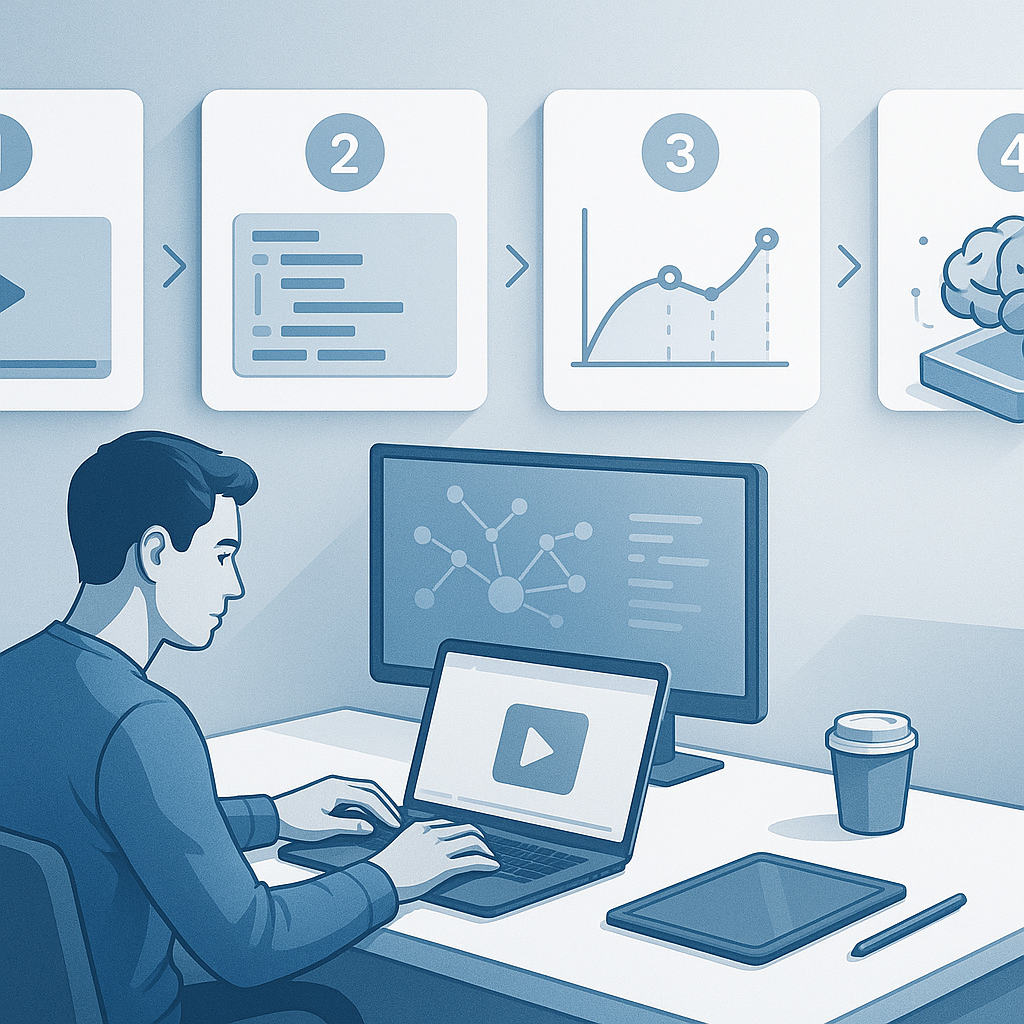
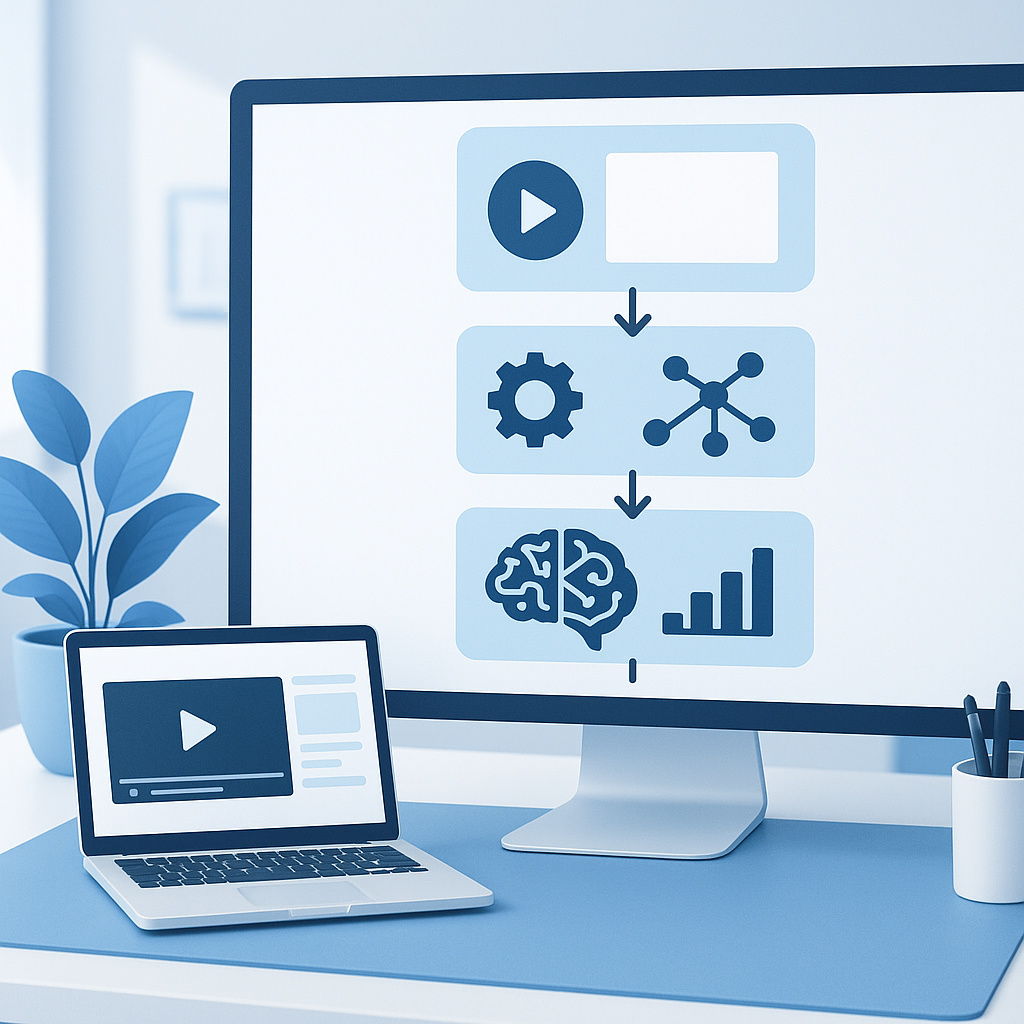
2) A Practical AI-Augmented Workflow: From Paper to Public-Facing Summary
This is the core of the process. The workflow blends human expertise with AI-assisted drafting to produce accurate, engaging summaries while preserving the scientific nuance.
- Prepare the paper for summarization
- Gather key sections: abstract, introduction, methods (high level), results, discussion, and conclusions.
- Note any figures, tables, or equations that carry essential messages. Plan to translate those visuals into plain-language explanations or simple visuals.
- Create a simple outline of the paper’s main points: question, approach, main findings, limitations, and implications.
Pro tip: Keep a separate “core claims” list. For each claim, tag its strength (e.g., well-supported, exploratory, limited by sample size). This helps you build a measured summary and catch overstatements early.
- Draft a plain-language outline (manual step)
- Translate each section into plain language bullets. For example:
- Research question: What problem did they try to solve?
- Approach: How did they study it, at a high level?
- Findings: What did they observe, in simple terms?
- Limitations: What remained uncertain or constrained?
- Implications: Why it matters for the public, policy, or practice.
- Decide on the summary length you’re targeting (e.g., 300-600 words for a short explainer; 1200-1500 words for a deeper piece).
- Generate AI-assisted drafts
- Use AI to draft the first pass from your plain-language outline. Provide clear, explicit prompts that reflect your audience and tone.
- Example prompts:
- “Rewrite the following plain-language outline into a 600-word explainer for a general audience. Use simple language, short sentences, and concrete examples. Do not introduce new results or claims not in the paper. Include a short section on limitations and real-world implications.”
- “Create a 5-bullet summary of the paper’s main findings, each bullet starting with a plain-language takeaway and ending with one concrete implication.”
- “Produce an FAQ section addressing likely questions from a non-expert reader, with concise, readable answers.”
- Give the AI both the outline and the constraints (tone, length, required sections). If you’re using a model that supports it, you can also supply a glossary for jargon to be avoided automatically.
- Human-in-the-loop editing (crucial)
- Review for accuracy first: verify facts against the paper, including numbers, methodological claims, and limitations.
- Check for overstatements and hedging: replace absolutes with calibrated language (e.g., “suggests,” “supports,” “is consistent with”).
- Adapt the voice to your audience: adjust the tone (friendly, authoritative, curious) and ensure accessibility.
- Rework any AI-generated passages that feel awkward or redundant. AI can produce fluent text, but it may miss context or nuance without human guidance.
- Integrate visuals: convert key data points into simple visuals or bullet lists. If figures are essential, describe them in plain language and provide alt text.
- Verify citations and attribution: ensure any claims that depend on sources are properly credited and that you’re not paraphrasing to imply results beyond what the paper demonstrates.
- Accessibility and inclusivity pass
- Readability: check sentence length, paragraph length, and vocabulary. Aim for short sentences with clear structure.
- Visuals: add alt text for images, diagrams, and charts. Use high-contrast colors and consider color-blind-friendly palettes.
- Language access: offer a plain-language summary or a glossary for technical terms (with simple definitions).
- Language of numbers: spell out common numbers when helpful, or provide units in parentheses to avoid confusion.
- Final polish and distribution plan
- Title and subheadings that are informative and engaging.
- A short teaser or hook for social sharing.
- A distribution plan: blog post, newsletter, public webpage, or micro-summaries for social channels.
- A quick review checklist: accuracy check, tone check, readability, accessibility compliance, and citation integrity.
Quick note: If you’re worried about policy or publisher restrictions, always review licensing and reuse terms before distributing AI-assisted summaries. Some journals or funders require attribution or prohibit public replication of exact wording.
Pro tip: Use a two-pass AI approach. In the first pass, generate a broad outline and a rough draft. In the second pass, ask the AI to refine specific sections with stricter constraints (e.g., “keep this section to 150 words, emphasize limitations, avoid causal language unless the study supports it”). This helps you keep control over length and emphasis while still benefiting from AI speed.
From my experience, iterative drafting — outline, draft, refine, repeat — yields the clearest, most trustworthy public pieces. It’s not “AI writes, we publish.” It’s AI-assisted drafting, with careful human stewardship.
3) Tools, Techniques, and Best Practices for AI-Driven Summaries
Choosing the right tools and approaches makes a big difference in accuracy, speed, and user experience.
-
Model selection and suitability
- For general-purpose summarization and tone tuning, large language models (LLMs) can be very effective. They’re particularly helpful for simplifying jargon and crafting accessible explanations.
- If you’re concerned about data privacy or want to run processes offline, consider local or enterprise-grade models and self-hosted pipelines.
- For technical accuracy, combine AI with domain-specific checkers or ontologies that help verify terminology and domain concepts.
-
Prompt design and prompts library
- Structured prompts with sections: audience, length, tone, required sections, and explicit constraints (e.g., “no new claims beyond the paper”).
- Use role-based prompts to anchor style, e.g., “You are an experienced science communicator who explains complex findings to non-experts.”
- Include examples in prompts: show a short, well-crafted sample summary to guide style and structure.
-
Summarization strategies
- Extractive summarization (pulling exact phrases) can preserve key phrases but may be less accessible. Use it conservatively to anchor messages.
- Abstractive summarization (paraphrasing) improves readability but risks misrepresentation. Always verify critical claims against the source.
- Hybrid approaches work well: extract core claims, then use AI to craft clean, accessible explanations around them.
-
Handling figures, tables, and data
- Describe visuals in plain language and provide a short bullet list of the key numbers or trends.
- For essential data, add a textual summary like: “Figure 2 shows a 25% increase in X under conditions Y.”
- If you can, link or embed accessible versions of charts (e.g., simple charts with alt text).
-
Citation management and integrity
- Maintain a simple citation protocol in your draft. Use reference IDs (e.g., [PMID:...] or DOI) and include a bibliography section in the final piece.
- When in doubt about a claim, cite the corresponding section of the paper and avoid paraphrasing beyond what the source states.
-
Privacy, safety, and ethics
- Be mindful of paywalled content and licensing. Don’t share full texts beyond what you’re allowed to distribute.
- Avoid unverified claims or sensationalism. If uncertainty exists, be transparent about it.
- Consider equity and accessibility: ensure language is inclusive and the material is accessible to people with different reading levels and abilities.
-
Quick note: If you’re new to AI in research communications, start with small, low-stakes papers and gradually build a library of prompts and templates. Document what works and what doesn’t so your team can reuse successful patterns.
-
Pro tip: Create a living prompt library. Save prompts that consistently produce accurate, engaging summaries and tailor them to different audiences (science-curious general audience, educators, journalists, policymakers). This makes scaling your efforts much faster over time.
From my experience, the best results come from combining strong prompts with rigorous human checks and a repeatable workflow. AI can do the heavy lifting of drafting, but your editorial judgment is what preserves credibility and trust.
4) Quality Control, Ethics, and Accessibility: Safeguards for Public-Facing Science
Public summaries carry a responsibility to be accurate, fair, and accessible. Here are key safeguards to adopt.
-
Accuracy and fact-checking
- Always verify AI-generated content against the original paper. Pay particular attention to methods, statistics, and claimed causality.
- Build a short, checkable checklist for reviewers: (a) Does the summary correctly state the research question? (b) Are the major results described accurately? (c) Are limitations clearly noted? (d) Are claims about implications grounded in the paper or clearly labeled as speculative?
-
Handling uncertainty and limitations
- Clearly distinguish between what is robust evidence and what remains uncertain or exploratory.
- Use hedging language where appropriate (e.g., “consistent with,” “preliminary results,” “requires replication”).
-
Ethics and bias considerations
- Watch for overgeneralization or sensational framing that could mislead readers or amplify misinterpretations.
- Be mindful of potential biases in the study population, methods, or interpretations, and reflect that in the summary.
-
Accessibility and readability
- Aim for plain-language explanations (short sentences, everyday terms) while preserving essential nuance.
- Provide a glossary for unavoidable jargon and define technical terms on first use.
- Include alt text for visuals and consider translations or easy-read versions if your audience includes non-native speakers or readers with cognitive differences.
-
Copyright, licensing, and attribution
- Respect publisher policies on reuse. When in doubt, cite the paper and credit the authors.
- If you’re distributing multi-part content (blogs, newsletters, social posts), ensure you’re not reproducing figures or large text blocks beyond fair use or licensing terms.
-
Quick note: Build a post-publication feedback loop. Encourage readers to flag any inaccuracies or ambiguities. Use that feedback to improve future summaries and prompts.
-
Pro tip: Run a “red team” review before publishing. Have a colleague unfamiliar with the study read the summary and point out unclear phrases, missing caveats, or potential misinterpretations. Fresh eyes catch issues that you might miss after repeating the same process.
From my experience, this combination of rigorous checks, transparent language about limitations, and a commitment to accessibility makes public-facing science more trustworthy and effective. It’s not just nice-to-have—it’s central to responsible science communication.
FAQ Section
Q1: What level of detail is appropriate for public summaries?
- A: Start with the core message: the research question, the essential finding, and a key implication. Add 1–2 sentences on methods at a high level if they’re crucial for understanding. Avoid full methodological minutiae unless your audience is technical. When in doubt, aim for a 300–600 word explainer for general audiences and 1000–1500 words for more in-depth readers.
Q2: How can I ensure accuracy when using AI?
- A: Use AI as a drafting aid, not a final source. Always verify any factual claim, figure, or statistic against the original paper. Keep a separate notes document mapping each AI-generated claim to the paper’s section. Build a concise checklist for reviewers focusing on accuracy, scope, and caveats.
Q3: How should I handle controversial or sensitive findings?
- A: Be extra careful with framing. Acknowledge uncertainty and avoid extrapolating beyond what the study supports. Provide context: how findings compare with existing literature, what remains unknown, and what additional research could clarify the issue. If necessary, provide a disclaimer that policy implications are speculative.
Q4: How do I preserve proper citations when I use AI?
- A: Include a bibliography with DOIs or PMIDs, and reference the exact sections of the paper where claims originate. If you use quotes or specific data points, attribute them clearly. Consider keeping a separate “claims map” that links each claim to its source in the paper.
Q5: What tools are best for researchers just starting with AI in science communication?
- A: Start with user-friendly LLM-based tools for drafting and editing (e.g., a general-purpose AI writing assistant). Use prompts tailored to your audience and a style guide you’ve developed. For more advanced workflows, explore tools that support local processing or secure data handling, and consider adding a simple fact-checking layer or ontology to validate domain terms.
Q6: How can I measure the impact of public-facing summaries?
- A: Track engagement metrics (views, time on page, shares, comments) and qualitative feedback (reader questions, sentiment). Conduct short readability tests or comprehension checks with a sample audience. If you distribute via newsletters or social channels, A/B test different headlines or summaries to learn what resonates.
Q7: How should I deal with paywalled papers?
- A: Respect licensing terms. You can summarize and discuss the findings at a high level without reproducing copyrighted material verbatim. When possible, link to open-access versions or author preprints, and encourage readers to consult the original sources. If your institution has access, you may be able to provide compliant access through a library portal or embargoed releases.
Q8: Can AI help train others to write better public summaries?
- A: Yes. Use AI to generate example summaries at different levels of complexity, and then review them with trainees. Highlight effective prompts, common pitfalls, and how to calibrate tone and length for different audiences. Pair AI outputs with editor feedback to accelerate learning.
Conclusion
Bringing scientific papers into the realm of public understanding is a vital form of science communication. It strengthens public outreach, supports informed decision-making, and helps ensure that research AI advances are grounded in clear, accurate messaging. An AI-augmented workflow lets you scale the creation of high-quality, accessible summaries while preserving the rigor and nuance that science demands.
Key takeaways:
- Start with a clear audience and purpose before drafting. A focused goal makes every sentence stronger.
- Use AI to accelerate drafting, but keep human editors in the loop to ensure accuracy and tone.
- Design prompts and templates that preserve core messages, avoid overclaiming, and invite accessibility.
- Build robust quality-control practices: fact-checking, transparent limitations, and inclusive language.
- Treat ethics and licensing seriously, especially when distributing publicly.
With a thoughtful, iterative approach, you can turn dense research into meaningful, public-friendly narratives that advance science literacy and public trust. Embrace the partnership between science communication and research AI, and you’ll help move knowledge from the page to real-world understanding.