How to Convert Training Manuals to Interactive E-Learning Courses
TL;DR
- Turning static training manuals into interactive e-learning unlocks better engagement, faster knowledge transfer, and scalable delivery. Start with a plan: map manual content to concrete learning objectives, then design micro‑learning modules with interactive elements. Use modern elearning creation tools to automate repetitive tasks and enforce consistency. Test with real users, collect analytics, and iterate. Pro tip: keep accessibility front and center so all learners can benefit. Quick note: expect a learning curve for SMEs and stakeholders, but the payoff is measurable—faster onboarding, higher retention, and consistent course quality.
Introduction
If you’ve ever handed out a dense training manual and hoped employees would absorb it, you’ve likely run into a few stubborn realities: people skim, retain little, and the material quickly becomes outdated. That’s where interactive learning comes in. By converting static manuals into engaging, scenario-driven courses, organizations can accelerate course development, improve knowledge retention, and scale training across teams. In this article, I’ll walk you through a practical, field-tested approach to transform a traditional manual into an effective, automated, and interactive e-learning experience.
From my experience working with teams across industries, the key to success isn’t just turning pages into slides. It’s about rethinking content flow, prioritizing outcomes, and using the right tools to support training automation. You’ll see how to align manual sections to measurable objectives, design engaging interactions, choose the right authoring tools, and deploy a course that’s accessible, adaptable, and easy to update.
Quick note: this isn’t about glamorizing tech for the sake of tech. It’s about practical improvements—shorter development cycles, better learner outcomes, and a solid framework you can reuse for future courses.
Pro tip: start with a pilot module from a high-priority topic. It’ll give you quick feedback, demonstrate value to stakeholders, and establish reusable patterns for the rest of the manual.
Plan and Prepare: Define outcomes, analyze the manual, and map to learning objectives
Before you touch a slide deck or a single interaction, invest time in planning. A solid plan is what turns a training manual into a true learning experience rather than just a digital page-turner.
-
Inventory and categorize content
- Separate procedural steps, policy explanations, troubleshooting tips, and safety notes.
- Flag content that’s time-sensitive or jurisdiction-specific (e.g., compliance).
- Identify content that’s best taught with interactivity (branching scenarios, simulations) versus pure reference (cheat sheets, checklists).
-
Define the learning objectives (backward design)
- For each section of the manual, write 1–3 concrete outcomes (what the learner should know or do after completing the module).
- Tie each objective to observable assessments (e.g., “can perform X task in Y minutes,” “choose the correct option in a troubleshooting scenario”).
- Keep the scope realistic: 5–7 minutes of focused learning per micro-module is a good starting point.
-
Audience and delivery constraints
- Who are the learners? Operators, managers, customer service reps? What’s their baseline skill level?
- What devices will they use? Desktop, tablet, mobile? Offline access? This informs the design and asset strategy.
- Delivery requirements: LMS compatibility (SCORM/xAPI), localization needs, accessibility standards (WCAG 2.1 AA).
-
Content governance and maintenance
- Create a revision log template: version, changes, effective date, owner.
- Establish update cadences so the course stays aligned with manuals that evolve (policies, SOPs, software versions).
-
Quick note: think of the manual as a map, not the destination. The goal is to guide learners to perform tasks confidently in real-world contexts, not just memorize pages.
-
Pro tip: involve a small cross-functional team early—SMEs for accuracy, a designer for usability, and a learning technologist for feasibility. Their early input saves cycles later.
-
Data point to consider: microlearning and modular design align with cognitive science findings that attention spans favor short, focused bursts. A well-structured micro-module can boost retention by a meaningful margin compared with long, monolithic sessions.
From my experience, starting with a one-page course map that links each manual section to an objective, a target assessment, and an interaction idea helps keep development focused and measurable.
Design for Interactive Learning: Storyboarding, formats, and microlearning
Design is where you turn plan into experience. The aim is to create interactive learning that mirrors real work, not just a better-looking PDF.
-
Choose the right formats for each topic
- Scenarios and branched decisions: simulate real contexts where learners decide next steps.
- Drag-and-drop activities: order steps, classify tools, or assemble checklists.
- Simulations: safe practice environments for procedures with immediate feedback.
- Knowledge checks and quick quizzes: confirm understanding, reinforce memory.
- Microlearning bites: 5–7 minutes per module, focusing on a single objective.
- Job aids and mini-cheatsheets inside modules: optional, quick-reference material.
-
Storyboarding your course
- Create a storyboard that outlines screens, interactions, and dialogue for each module.
- Use a narrative arc: setup (context), action (tasks), feedback (results and consequences), and reflection (learning takeaways).
- Plan branching paths for different learner roles or scenarios (e.g., “If X condition, choose path A; otherwise path B.”)
-
Accessibility and usability from day one
- Ensure keyboard navigability, screen reader compatibility, and color contrast that meets WCAG guidelines.
- Provide alt text for media, captions for videos, and transcripts for audio.
- Design for mobile first, then scale to larger screens.
-
Content pacing and cognitive load
- Break tasks into chunks; avoid wall-to-wall text.
- Use visuals to support, not overwhelm; pair text with relevant imagery, icons, or process diagrams.
- Provide just-in-time guidance rather than front-loading every detail.
-
Pro tip: leverage templates for consistency
- Create reusable slide and interaction templates (title screen, scenario screen, drag-and-drop, quiz, feedback).
- Use a consistent color scheme, typography, and interaction cues across modules to reduce cognitive load and speed up development.
-
Quick note: plan localization early. Translations take time, and adding language options later can be disruptive.
-
From my experience: you’ll achieve stronger engagement if you let learners practice the exact tasks they’ll do on the job, not just recall information. Build at least one high-fidelity scenario per major function and couple it with a brief, focused knowledge check.
-
Data to consider: studies show microlearning and scenario-based learning improve retention and transfer to job tasks more effectively than passive content. Expect higher completion rates and better post-training performance when interactivity is meaningful and aligned with real tasks.
-
Example: If the manual covers “incident reporting,” build an interactive incident reporting scenario: the learner encounters a simulated incident, collects details, chooses report fields, and then gets immediate feedback on the accuracy of the report and recommended next steps.
-
Quick note: keep a running risk register for design choices—what interacts, what could cause confusion, and how you’ll mitigate.
-
Pro tip: pilot your storyboard with a small group of learners and an SME. Gather quick feedback on realism, pacing, and clarity before full production.
Build with the Right Tools: elearning creation, automation, and workflow
Choosing the right tools and establishing an efficient workflow is what makes the plan scalable and repeatable. You want a setup that can convert a manual into an interactive course and then automate repetitive tasks across many modules.
-
Core tools you’ll likely use
- Authoring tools: Articulate Storyline, Captivate, Lectora, iSpring Suite, Rise 360, Adapt Learning. Each has strengths: some excel at complex interactions (Storyline), others at rapid template-based production (Rise 360), and some offer open ecosystems for customization (Adapt).
- Asset libraries and templates: use ready-made icons, templates, and stock media to speed production and maintain consistency.
- Learning Management System (LMS) or LRS: SCORM/xAPI packaging, learner tracking, and assessments. If you’re using xAPI, you can capture more granular data about interactions and performance.
- Accessibility and testing tools: automated checks for WCAG compliance, screen reader tests, and cross-device previews.
-
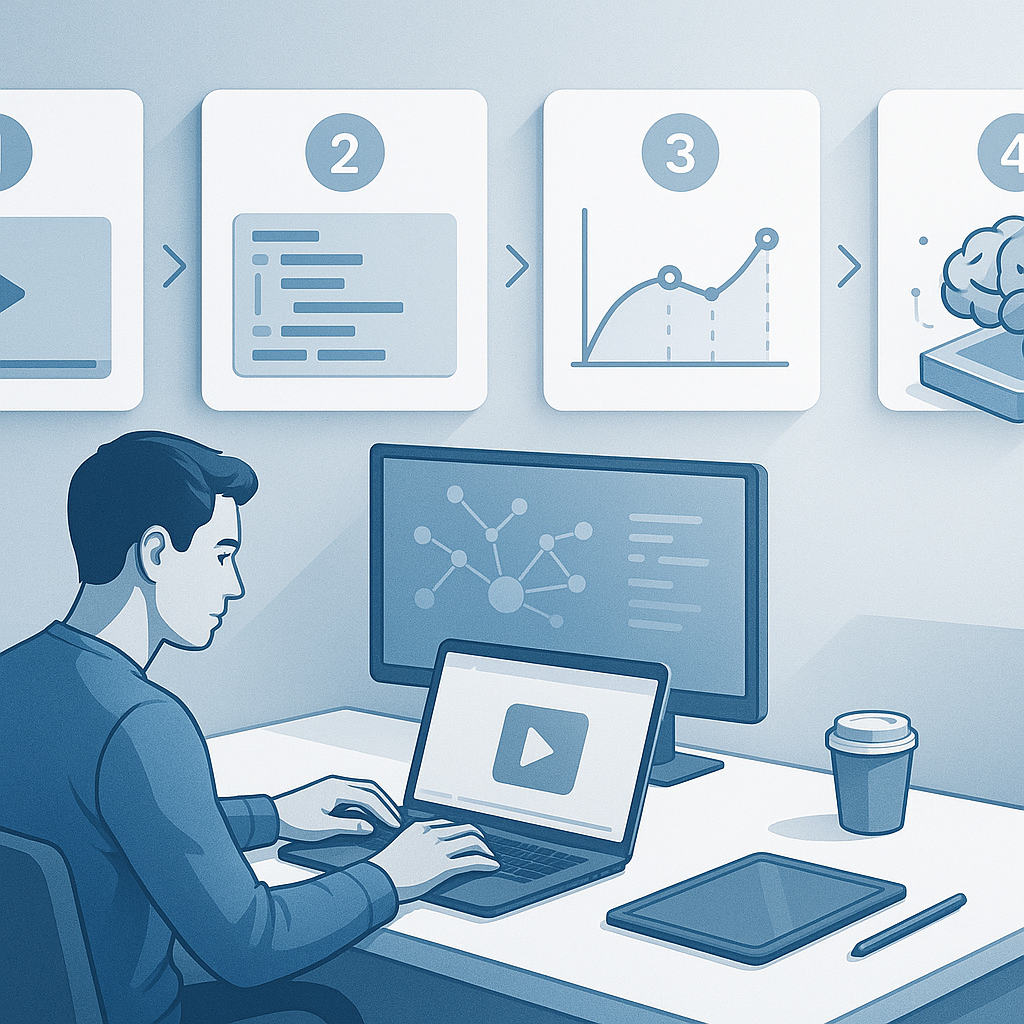
Building a efficient content conversion workflow
- Content extraction: pull key steps, decision trees, and policies from the manual. Create a “content deck” that maps each topic to an objective and an interaction type.
- Asset planning: decide what visuals, screenshots, diagrams, and videos you’ll produce or repurpose. Plan for captions and transcripts early.
- Template-driven authoring: use templates for consistent layout, typography, and interaction patterns. This reduces rework and speeds up future courses.
- Interaction design: map each objective to a specific interaction (scenario, drag-and-drop, quiz). Keep the number of interactions per module manageable.
- Review and QA: SME and accessibility checks on a pilot version. Iterate quickly.
- Packaging and rollout: export to SCORM/xAPI, upload to LMS, set up prerequisites, credits, and completion criteria.
-
Automation and modularity to scale course development
- Use modular content blocks. Create a library of micro-modules that can be recombined for various courses.
- Automate asset production where possible (e.g., generate slide decks from content outlines, auto-caption videos).
- Leverage LMS features for automation: auto-enroll, reminders, and conditional pathways based on assessment results.
- Localization automation: maintain source content in a single language and push translations through a translation management process integrated with your authoring tool.
-
Content standards and interoperability
- Publish in standards-compatible formats (SCORM 1.2 or 2004, or xAPI) so you can track completion, scores, and interaction data across systems.
- Establish a glossary and consistent terminology to avoid ambiguity in different modules.
-
Quick note: reusable content is a superpower. When you design a micro-module that’s standalone but re-usable across courses, you can assemble new courses in hours rather than weeks.
-
From my experience: a template-driven approach saves tens to hundreds of hours when you roll out multiple topics that share common tasks. It also makes maintenance much easier—update one template, propagate changes across all modules.
-
Pro tip: keep a small library of “low-friction” interactions that you can drop into multiple modules (e.g., a standard safety checklist, a decision-tree placeholder, a quick-navigate glossary). It speeds development and preserves consistency.
-
Quick note: budget for a pilot, a small but representative course that demonstrates the value of the approach to stakeholders. A successful pilot often accelerates adoption and unlocks resources for broader rollout.
-
Data point (context): organizations investing in modern authoring tools and training automation often report faster development cycles and higher learner satisfaction. A streamlined, template-driven process can cut development time by a meaningful margin compared with building each module from scratch.
-
Example: If you convert a 45-page manual into a 6-module course, a template-based workflow could reduce production time by 30–50% compared to ad-hoc slide-by-slide development, while maintaining quality and consistency.
-
Pro tip: document your workflow. Create a “course build playbook” that outlines steps, roles, review points, and timelines. This becomes your repeatable engine for course development.
Implement, Test, and Optimize: rollout, analytics, and continuous improvement
The last mile is where you verify impact, gather data, and refine. A well-executed rollout turns your interactive e-learning into a measurable success.
-
Pilot and gather feedback
- Run a small pilot with actual learners and monitor for technical issues, content clarity, and engagement.
- Use multiple channels for feedback: surveys, quick polls after modules, and one-on-one SME debriefs.
- Track early metrics: completion rate, time-on-task, first-attempt pass rate, and qualitative feedback on realism.
-
Measure impact with robust analytics
- Knowledge retention: compare pre- and post-assessment results. Look for a meaningful lift (e.g., 15–25% improvement as a baseline, higher for complex topics).
- Behavioral transfer: use post-training evaluations or performance metrics to see if learners apply skills on the job.
- Engagement indicators: average time in module, interaction counts, and completion velocity.
- Training automation benefits: monitor how automation affects update cycles, localization speed, and the ability to scale to new teams.
-
Accessibility and inclusivity
- Ensure all learners, including those with disabilities, can access content. Use captions, transcripts, alt text, and accessible navigation.
- Provide alternative formats for critical information (e.g., downloadable PDFs as a companion to the interactive course for offline use).
-
Continuous improvement cycle
- Establish a cadence for content reviews (e.g., quarterly) to keep manuals aligned with policies, tools, and procedures.
- Use learner data to drive updates: if a module has low completion, examine pacing, interaction relevance, and clarity. If assessments show gaps, add targeted remediation or additional micro-modules.
-
Pro tip: run A/B tests for key elements (e.g., a scenario-based interaction vs. a traditional quiz) to see what yields better learning outcomes for your audience.
-
Quick note: localization and content updates are often ongoing tasks. Build a lightweight change-management process so updates don’t derail deployment timelines.
-
From my experience: the real power of a well-designed course emerges after deployment. When teams see faster onboarding, fewer support calls, and clearer performance improvements, they’re more willing to invest in the next wave of conversions from manuals to interactive learning.
FAQ Section
- What is training automation, and how does it relate to converting manuals to elearning?
- Training automation refers to using tools and workflows to streamline content development, delivery, tracking, and updates. When you convert a manual to e-learning, automation helps you reuse templates, publish updates efficiently, track learner progress, and deliver personalized learning paths at scale. It reduces manual tasks, speeds up updates, and provides richer analytics for improvement.
- How do I map content from a manual to learning objectives?
- Start by breaking the manual into logical chunks (topics or tasks). For each chunk, write 1–3 learning objectives that describe observable learner outcomes. Then plan the corresponding assessments and interactions that validate those outcomes (e.g., scenario-based decisions, performance tasks, or short quizzes). Use backward design: begin with the result you want and work backward to the content you’ll deliver.
- What format is best for interactive learning?
- A mix often works best. Use scenarios and simulations for tasks that require judgment and procedural accuracy. Include drag-and-drop activities for ordering or organizing steps, and short quizzes for knowledge checks. Aim for microlearning modules (5–7 minutes) to sustain attention and improve retention. The exact mix depends on your audience, the topic’s complexity, and the available tooling.
- How long does it typically take to convert a manual into an interactive course?
- It varies by length, complexity, and how reusable your assets are. A lean, template-driven approach can drastically cut development time. For a 20–30 page manual, many teams can produce a 4–6 module course within 4–8 weeks, including design, development, and QA, especially when you reuse templates and automate parts of the process. Expect longer timelines for highly technical or regulatory content that requires extensive SME review.
- How do I ensure accessibility and inclusivity?
- Plan for accessibility from day one: keyboard navigability, screen reader compatibility, adequate color contrast, captions and transcripts for media, and descriptive alt text for images. Validate that interactive elements are usable with assistive technologies. If you’re localization-heavy, ensure that translated content maintains accessibility features and timing.
- What metrics should I track after rollout?
- Completion rates, time-on-task, assessment scores, and the rate of knowledge transfer to on-job performance are core. Track engagement signals (interactions per module, drop-off points), learner satisfaction, and feedback quality. If you’re measuring business impact, link course completion to performance outcomes (e.g., error rates, task completion speed, safety incidents).
- How can I keep content up to date with evolving manuals?
- Use a centralized content management process with a revision log. Build modules from reusable blocks so updates touch just the affected blocks. Publish on SCORM/xAPI for traceability and automate notifications to learners when updates are available. Consider a lightweight approval workflow that alerts SMEs when changes occur.
- Do I need to rewrite all the manual content, or can I repurpose it?
- You can and should repurpose, but you’ll likely rewrite for learning clarity and impact. Convert dense technical prose into concise learning objectives, actionable steps, and decision points. Use the manual as a content source but repackage it into activities, scenarios, and micro-lessons that reflect how learners operate in real contexts. Distill facts into digestible chunks and provide just-in-time references within the course.
- Is a comparison table necessary for tool selection?
- Not in this article, but a thorough tool selection exercise typically uses criteria like ease of use, template quality, interactivity capabilities, LMS compatibility, accessibility features, localization support, and price. If you’d like, I can help build a criteria-based evaluation matrix tailored to your organization.
Conclusion
Transforming training manuals into interactive e-learning courses is less about repackaging content and more about rethinking learning for real-world performance. By planning with concrete outcomes, designing for interactivity and microlearning, choosing the right elearning creation tools, and building a scalable workflow with training automation in mind, you can produce courses that learners not only complete but remember and apply.
Key takeaways to keep in mind:
- Start with outcomes, not pages. Map each manual section to measurable objectives and practical assessments.
- Design with the learner in mind. Use scenarios, simulations, and short modules to boost engagement and retention.
- Leverage templates and modular content to scale course development and simplify updates.
- Invest in proper tooling and automation to accelerate production, improve consistency, and gather rich analytics.
- Test, measure, and iterate. Use pilot cohorts, collect feedback, and continuously optimize for accessibility and effectiveness.
If you’re new to this journey, begin with a high-value module—perhaps a core procedure that’s critical to safety or customer outcomes. Build a strong pilot, demonstrate value to stakeholders, and then scale to the rest of the manual. With the right approach to training automation and course development, you’ll unlock interactive learning that’s not only more engaging but also more effective in translating knowledge into action.
Pro tip: Treat your first few modules as a proof of concept. Document what worked, what didn’t, and the exact impact on learner performance. Those insights will guide your entire transformation.
Quick note: remember that people learn best when they feel capable and supported. Provide clear instructions, constructive feedback, and easy access to job aids within each module. The rest—retention, transfer, and improved performance—will follow.
If you want, we can tailor this approach to your industry, audience, and current tools. I can help outline a concrete, phased plan with a pilot module, a recommended toolset, and a rollout timeline that fits your organization’s constraints and goals.