How to Create Language Learning Materials from Text Documents
TL;DR
Turn plain text into engaging, multi-skill language learning materials with a repeatable workflow. Start by defining your learners and goals, extract and organize core vocabulary and patterns, and then layer in listening, speaking, reading, and writing activities. Use text-to-speech to create authentic listening practice, build spaced-repetition flashcards, and track progress with simple metrics. Pro tip: use AI-powered summarization and glossaries to speed up the process, but always validate accuracy and licensing. Quick note: keep materials adaptable so they can serve learners at different levels and in different languages.
Introduction
You’ve got a stack of text documents—news articles, manuals, blog posts, policy briefs—that could fuel countless language learning activities. Yet turning those pages into high-quality, learner-friendly materials often feels like reinventing the wheel every week. The good news is you don’t need to start from scratch every time. By applying a practical, AI-assisted workflow, you can transform any text corpus into a rich set of learning materials that support all four language skills: reading, listening, speaking, and writing.
From my experience helping teachers and teams create scalable language resources, the most effective approach combines content curation, linguistic annotation, audio enhancements, and smart retrieval via spaced repetition. The emphasis is not just on “more material,” but on material that’s structured, goal-oriented, and easy to reuse across different cohorts. In this article, you’ll find a clear, actionable path to go from raw text to a full suite of learning materials—without getting bogged down in complexity.
Main Content Sections
1) Define your goals and choose the right texts
The foundation of any good material is clarity about what learners should achieve and which texts will best help them get there.
Key steps
- Identify the learner profile: language, level (A1–C2), goals (travel, business, academia), and time commitment.
- Set concrete learning objectives for the text: reading for gist, understanding key details, pronunciation practice, or producing a short paragraph using target vocabulary.
- Source texts with licensing in mind: public-domain material, your own created content, or explicitly licensed resources. If you’re repurposing third-party content, you may need permissions or to rely on fair-use guidelines where applicable.
- Assess the text at the sentence level: is it too hard? too easy? which sentences introduce new vocabulary or grammar?
- Estimate the vocabulary load: aim for a core vocabulary set (e.g., 300–1,000 most frequent words for beginner to intermediate) and identify phrases and collocations that carry meaning beyond individual words.
Practical example
Imagine you’re building materials for Spanish-speaking travelers learning English at a beginner level. Start with short travel-oriented articles (about 500–800 words) that include common nouns (ticket, platform, passport), verbs (to board, to wait, to confirm), and easy phrases (Could you help me? I need directions). Create a short glossary of 150–250 core words, plus a list of 20–40 useful phrases.
From my experience, a well-scoped text yields far better engagement. If you overreach (e.g., a dense policy document for beginners), learners may disengage fast. On the flip side, texts that reflect real-life contexts—menus, weather reports, transit announcements—tend to boost motivation and retention.
Pro tip: use a lightweight readability score as a rough guide (even for non-English texts). While it’s not perfect for every language, it helps you gauge sentence complexity and chunk size for beginners.
Quick note: consider copyright and licensing upfront. If you don’t own the text, look for permissive licenses or use your own content to avoid licensing headaches.
Key data to keep in mind
- For vocabulary-heavy materials, focusing on high-frequency words first can dramatically reduce learning time. Studies on SRS (spaced repetition systems) show retention gains roughly in the 20–60% range depending on material and interval choices.
- Real-world content that learners can relate to tends to yield higher engagement and longer study sessions, which correlates with better long-term retention.
2) Transform text into multi-skill learning assets
Once you’ve chosen texts and defined goals, turn them into a structured package that supports reading, listening, speaking, and writing.
What to produce from a text
- Vocabulary and phrase banks: frequency-ranked lists, glosses, and example sentences in context.
- Grammatical notes: short explanations tied to text examples, plus rule summaries and common errors.
- Reading activities: comprehension questions, cloze tests, true/false, and summarization prompts.
- Listening activities: TTS-generated audio aligned to the text, dictation tasks, and shadowing prompts.
- Speaking and writing tasks: role-plays, paraphrasing prompts, and short writing assignments using the target vocabulary/structures.
- Review materials: flashcards for spaced repetition, quick quizzes, and quick-check worksheets.
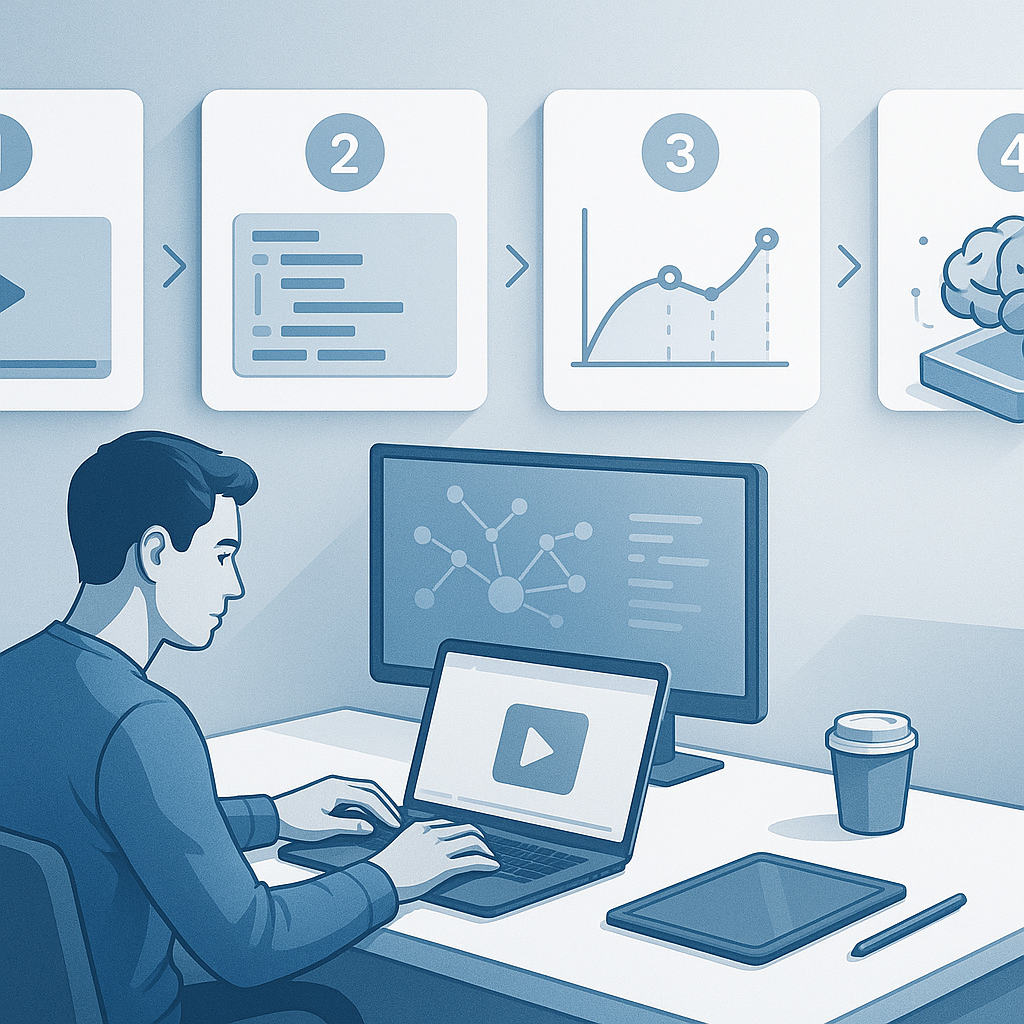
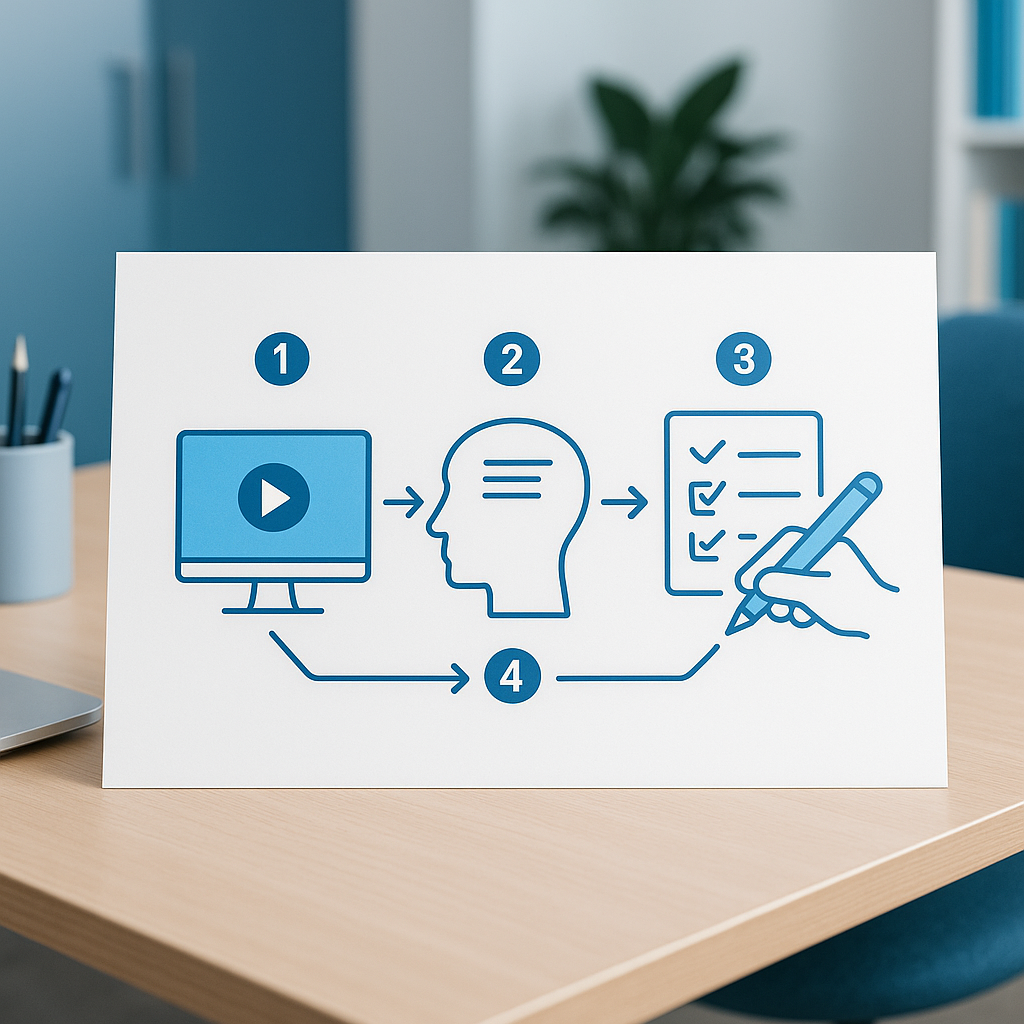
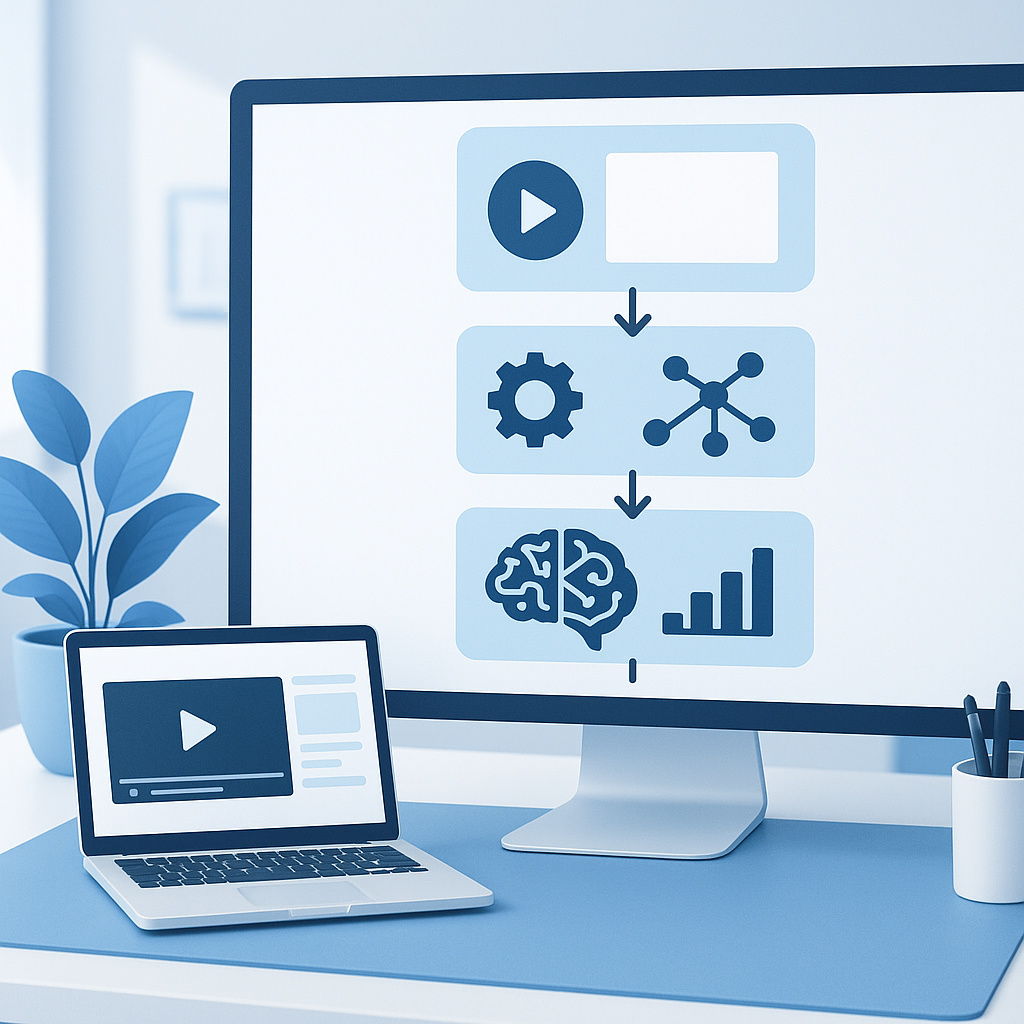
Step-by-step workflow
- Extract core vocabulary and phrases
- Use frequency lists from your target language or derive them from the text via AI-assisted tools.
- Mark multi-word expressions and collocations (e.g., “board the train,” “margin of error”) that carry meaning beyond single words.
- Build a bilingual glossary (or L1–L2 if you’re teaching in a bilingual setting)
- Each entry includes: headword, part of speech, definitions in the target language, example sentence from the text, and a second example in a new context.
- Create grammar notes tied to the text
- Identify 2–4 grammar points present in the text and write concise, learner-friendly explanations with at least one example from the text.
- Design reading comprehension tasks
- 5–8 questions per short text, mixing factual, inference, and vocabulary-focused items.
- Add a concise summary prompt (one or two sentences) to promote synthesis.
- Produce listening practice using text-to-speech
- Generate an audio track that follows the same text, optionally with speaker notes or a slower speed for beginners.
- Craft speaking and writing tasks
- Quick speaking prompts: retell the text in your own words, answer guided questions, or describe a scene using the target vocabulary.
- Writing prompts: write a short paragraph summarizing the text, or compose a dialogue using 5–10 target phrases.
- Assemble flashcards and spaced-repetition content
- Create cards for vocabulary (definition, example, pronunciation tip), collocations, and grammar points.
- Use SRS to optimize repetition intervals based on learner performance.
Pro tip: automate repetitive parts
- Use AI to draft glossaries and sample sentences from the text. Then sanity-check for accuracy and naturalness.
- A simple template can speed things up: for each new text, generate a 1) vocabulary list, 2) glossary with 2 examples each, 3) 5 comprehension questions, 4) 3 speaking prompts, and 3 writing prompts.
Quick note: while AI can speed up generation, human review matters. Language nuance, false cognates, or context-specific usage can slip through. Always validate generated content, especially for accuracy and register.
From my experience, a strong, consistent template helps learners feel a predictable rhythm. When learners know they’ll see the same structure in every lesson, they can focus on content rather than format.
Statistical touchpoint
- In blended learning environments, materials that combine reading, listening, and retrieval practice via flashcards tend to outperform text-only resources. Meta-analyses show that retrieval-based activities (like flashcards and quizzes) are notably effective for vocabulary retention, with gains often in the 20–60% range depending on frequency and spacing.
3) Enhance with audio, AI features, and assessment
Adding audio and smart assessment is where a lot of value emerges. It turns static text into an immersive, interactive learning experience.
Audio and TTS essentials
- Text-to-speech (TTS) can provide high-quality, natural-sounding listening practice. Modern neural TTS voices are often near-human in prosody and clarity, with many languages covered and multiple voice choices.
- Align audio to the text so that learners can listen while following the transcript. Alignment makes dictation and shadowing tasks feasible and accurate.
- Customization matters: adjust speaking rate, choose voice gender, and enable pronunciation guides for tricky sounds.
Practical approach
- Produce synchronized audio and transcript
- Use a TTS engine to generate the audio track and ensure the transcript matches word-for-word. If needed, correct any homographs or pronunciation quirks.
- Create listening tasks
- Dictation: learners type what they hear; feedback focuses on spelling and form.
- Shadowing: learners repeat after the speaker with minimal lag, focusing on rhythm and pronunciation.
- Comprehension questions: after listening, answer questions that verify understanding and highlight key details.
- Add pronunciation and phonetics aids
- Provide phonetic hints or IPA transcriptions for tricky words, plus audio examples of difficult sounds.
- Integrate AI-generated comprehension questions
- Use AI to draft multiple-choice or short-answer questions that target main ideas, inferences, and vocabulary use from the audio.
Spaced repetition and learning materials delivery
- Pair every core vocabulary item with a spaced-repetition card. Spaced repetition systems (SRS) optimize review intervals to maximize retention and minimize overload.
- Typical improvements from well-implemented SRS in vocabulary learning range from 20% to 60% in long-term retention, with some learners experiencing 2x to 6x retention gains compared to non-spaced practice.
- Track metrics like time-on-task, accuracy on recall, and rate of vocabulary growth to adapt the difficulty of future texts.
Pro tip: for pronunciation practice, combine shadowing with visual feedback. If you have access to ASR (automatic speech recognition) feedback, you can give learners real-time cues about pronunciation, intonation, and pace.
Quick note: not every language has perfectly natural TTS options yet. For languages with limited TTS quality, consider pairing TTS with human-recorded audio or community-recorded clips when possible to maintain engagement and accuracy.
From my experience
- A small pilot run with 2–3 texts and 20–30 learners can reveal common pain points: misalignments between audio and transcript, vocabulary gaps, or questions that are confusing. Use those insights to refine your template before scaling.
Examples of the end-to-end flow you can replicate
- Start with a 600-word article in your target language.
- Produce a 150-word glossary and 15–20 phrases tailored to the text’s context.
- Generate 8 comprehension questions and 3 quick writing prompts.
- Create 10–15 flashcards (vocabulary, phrases, grammar cue).
- Produce a 2–3 minute audio track with TTS, aligned to the transcript.
- Add dictation and shadowing tasks, plus a comprehension check in the LMS or learning app.
FAQ-style summary
- This audio-rich package often leads to higher engagement, which, in turn, increases study time and retention.
FAQ Section
- How do you choose texts that suit different proficiency levels?
- Start with a leveled text library or grading rubric by language level (A1–A2, B1–B2, etc.). For lower levels, pick shorter texts with high-frequency words and simple sentence structures. For higher levels, choose texts with more complex syntax, abstract concepts, and field-specific vocabulary. As you scale, layer in scaffolds: glossaries first, then comprehension questions, then production tasks.
- What are best practices for vocabulary extraction?
- Focus on high-frequency words first, then add essential verbs and common expressions. Mark collocations (natural word pairs) rather than teaching words in isolation. Include pronunciation tips and example sentences from the original text to reinforce context. Use AI to speed up extraction, but validate for accuracy and naturalness.
- How can I incorporate speaking practice from text?
- Use prompts that require learners to paraphrase, summarize, or role-play a scenario described in the text. Pair speaking tasks with structured rubrics—pronunciation, grammar usage, vocabulary accuracy, and fluency. If possible, record learners’ responses for self-review or teacher feedback.
- How should I handle copyright and licensing?
- Prefer texts with permissive licenses (MIT, CC BY, CC BY-SA) or your own originals. If using third-party content, check licensing terms and obtain permission when needed. For school or personal use, some fair-use provisions may apply, but it’s better to rely on licensed or public-domain material for scalable materials.
- How do I measure the effectiveness of these materials?
- Track engagement metrics (time on task, session frequency) and learning outcomes (vocabulary retention, reading comprehension scores, speaking fluency). Run short pre/post assessments and collect learner feedback on ease of use and perceived usefulness. A simple dashboard that combines these signals can guide iterative improvements.
- Can AI generate activities without making them dull?
- Yes, but you’ll want to curate and customize AI outputs. Start with AI-generated drafts, then tailor questions to align with your goals and add variety: mix multiple-choice with open-ended prompts, include false friends checks, and create project-based tasks (e.g., prepare a short travelogue based on the text).
- What if the target language has limited TTS support?
- If the language has few high-quality TTS voices, you can supplement with human-recorded audio from native speakers or community voices. Also, use slower playback, clearer enunciation, and phonetic guides to compensate for gaps in TTS quality. Pair with interactive listening tasks to maintain learner engagement.
- How do I adapt materials for multiple languages from the same text pipeline?
- Use language-agnostic templates: vocabulary extraction, glossary creation, grammar notes, comprehension questions, and audio tasks. For each target language, tailor glossaries and examples to match linguistic realities (word order, false friends, gender/number agreement, etc.). Your AI tools should support multilingual processing to automate much of the scaffolding.
Conclusion
Creating language learning materials from text documents is less about reinventing content from scratch and more about orchestrating a disciplined, repeatable process. Start with clear learning goals and carefully chosen texts, then transform those texts into multi-skill assets: vocabulary banks, grammar notes, reading and listening tasks, and speaking/writing prompts. Add the audio layer with text-to-speech, align transcripts, and deploy spaced-repetition-based review to maximize retention. Measure engagement and outcomes, and iterate your templates based on real learner feedback.
Key takeaways
- Define your learner profiles, choose texts carefully, and map every bit of content to concrete learning objectives.
- Build structured assets that cover vocabulary, grammar, reading, listening, speaking, and writing—then reuse and repurpose across different texts.
- Leverage audio and AI to accelerate production, but validate for accuracy and naturalness.
- Use spaced repetition to boost long-term retention and keep learners progressing over time.
- Start small, pilot with a few texts, gather feedback, and scale with a repeatable workflow.
Pro tip: Treat material creation as an ongoing collaboration between content, pedagogy, and technology. The more you iterate based on learner data, the more efficient and effective your language learning materials become.
Quick note: if you’re sharing materials with others, consider licensing your templates and example blocks as open educational resources (OER). That helps others reuse and adapt your proven workflow, multiplying the impact of your efforts.
From my experience, the payoff isn’t just in the content you produce but in the process you establish. A well-documented workflow, clear goals, and smart use of AI tools can shave hours off each cycle and deliver consistently high-quality learning materials that genuinely support language learning, fueled by language learning data, educational ai, text to speech, and a thoughtful approach to building lasting learning materials.