How to Transform Meeting Notes into Action Item Videos Using AI
TL;DR
- You can turn meeting notes into actionable video briefs with AI, turning scattered tasks into clear, shareable video summaries.
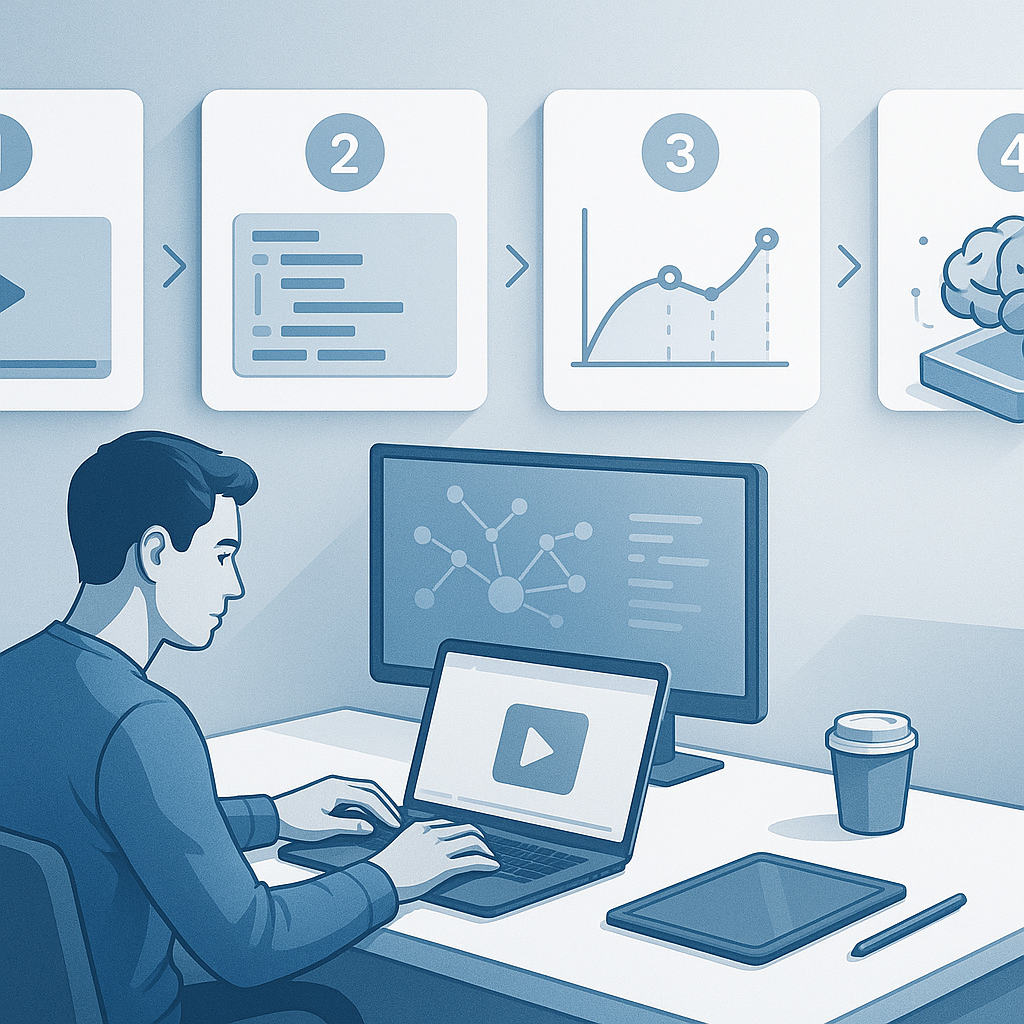
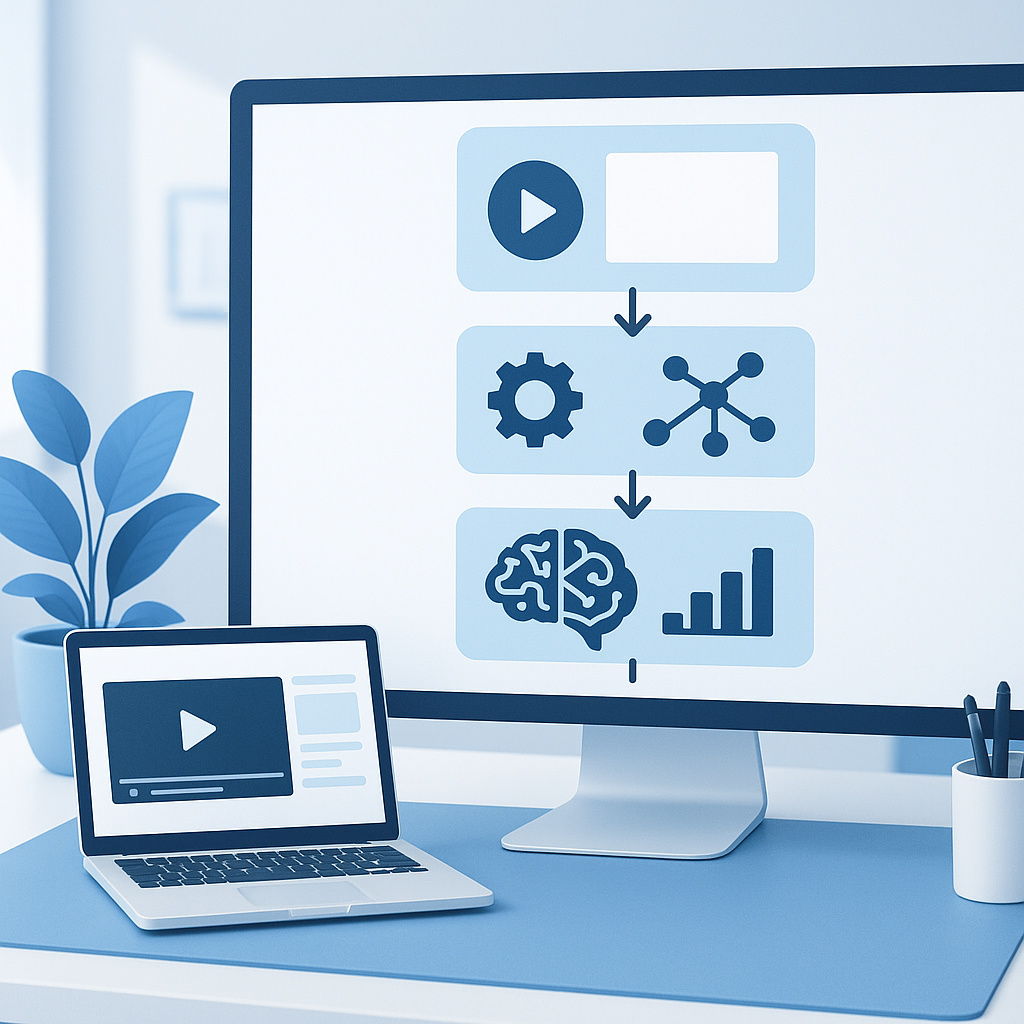
- The process typically involves: transcribing the meeting, extracting action items with owners and due dates, scripting concise updates, and generating short videos with AI voices or avatars.
- Benefits include faster alignment, higher retention, and fewer follow-up emails. Expect noticeable improvements in task completion and team accountability after a few sprints of adoption.
- Pro tip: start with a pilot on one team, use a simple 60–90 second format, and gradually expand the workflow across projects. Quick note: maintain clear privacy rules and access controls from day one.
Introduction
Meetings are where decisions happen, but the real impact often lies in what happens next—who does what, by when, and how we’ll know it got done. Traditional meeting notes tend to sit in a file cabinet of emails and documents, with action items buried in bullet points or missed entirely in the rush to wrap up. That’s a productivity bottleneck many teams live with every week.
Enter workplace AI and productivity automation. When we combine meeting notes with AI-driven extraction, scripting, and video generation, we can create short, action-focused videos that keep everyone on the same page. Instead of scrolling through pages of notes, teammates watch a 60–90 second video that highlights decisions, assigns owners, and clarifies next steps. It’s not about replacing human communication; it’s about making follow-through easier and faster.
From my experience, teams that adopt action-item videos tend to see two recurring wins: faster task kickoff and fewer miscommunications about who’s responsible for what. You’ll still need human judgment for nuance, but AI can shoulder the repetitive work of pulling tasks from notes, turning them into a shareable narrative, and nudging people toward action.
In this guide, I’ll walk you through a practical, end-to-end workflow to transform meeting notes into action item videos using AI. We’ll cover how to capture notes effectively, extract precise tasks, craft scripts, generate videos, and measure impact. I’ll share real-world tips, pitfalls to avoid, and a straightforward implementation plan you can adapt to your team.
Pro tip: the best results come from starting small—pilot with a single team, pick a single video format, and scale up as you refine the process.
Quick note: before you begin, align on privacy and data-handling rules. Transcripts and videos may include sensitive information, so decide who can access them and where they’ll be stored.
Main Content Sections
1) From Meeting Notes to Action Items: A Data-Driven Workflow
The backbone of action-item videos is a clean, reliable pipeline that moves from raw notes to concrete tasks.
What the workflow typically looks like:
- Capture: Record or transcribe the meeting. Most teams use a hybrid approach—recordings plus live transcription in the notes app or meeting tool.
- Identify: Use AI to extract tasks, decisions, owners, and due dates. The goal is structured action items, not generic takeaways.
- Verify: A quick human check ensures the AI didn’t miss context or misassign responsibilities.
- Convert: Turn the itemized actions into a concise, script-friendly format for the video.
- Deliver: Generate the video and publish it to the chosen channels.
Key data fields you’ll want to extract for each item:
- Action item (task description)
- Owner (responsible person)
- Due date (if provided)
- Priority (optional)
- Context or link to the relevant agenda, doc, or timestamp
- Status (e.g., not started, in progress, blocked)
Practical prompts you can adapt for AI note extraction:
- “From this meeting transcript, list all action items with owners and due dates. Include a brief context link to the relevant section of the agenda.”
- “Identify decisions and turn them into action items with specific owners and deadlines. Flag any items that are blocked or need escalation.”
- “Summarize the key tasks from the discussion for a post-meeting recap, in bullet-point form, organized by owner.”
From my experience, the more structured your notes, the easier the AI can extract accurate items. If you can, capture the meeting with a clear agenda and timestamped highlights; it pays off later when you’re pulling tasks.
Pro tip: start with a lightweight taxonomy for tasks. For example, categorize items as “Decision → Action,” “Follow-up,” “Info request,” or “Blocking issue.” This helps the AI route items to the right downstream process and reduces rework.
Quick note: consider privacy implications when transcribing and processing meetings that include confidential information. Anonymize sensitive data where possible, or restrict access to the pipeline only to authorized teammates.
2) Automating the Script: Turning Action Items into Video Narratives
Once you have clean action-item data, the next step is to craft a short, clear narrative that’s ready for video. This is where AI shines: you can generate a script that highlights decisions, assigns ownership, and outlines next steps in a way that’s easy to digest.
A practical approach:
- Script structure: One short segment per action item, plus a quick intro and outro. Keep each item to 15–25 seconds, so a 4–6 item meeting yields a 60–90 second video.
- Tone and style: Professional, concise, and action-oriented. Include a call-to-action at the end, such as “Please confirm by [date]” or “Update the tracker in [PM tool].”
- Visual cues: Pair each item with a simple on-screen card that shows the task, owner, and due date. You can also add a quick graphic or icon representing the project or department.
- Voice and narration: Use AI voices or character avatars to deliver the narration. Make sure the voice matches your company’s branding and is accessible (clear pronunciation, appropriate speed).
What a production flow might look like:
- Step 1: For each action item, generate a sentence-style script: “Item: Prepare slide deck for Q4 launch. Owner: Priya. Due: Oct 12.”
- Step 2: Convert to video-ready bullets: short phrases with on-screen text.
- Step 3: Create a video storyboard: a title slide, per-item slides, and a closing call-to-action.
- Step 4: Add captions and accessibility features: auto-captioning, high-contrast visuals, and language options if needed.
- Step 5: Render and publish to your channel of choice (Slack, Teams, Notion, or your internal LMS).
From my experience, keeping items tight—roughly 60–90 seconds total—improves completion rates. People actually watch and remember more when the video is brief and punchy, rather than a long, dense recap.
Pro tip: build a reusable video template. A single template that includes the intro, per-item card layout, and closing CTA makes it easy to generate new videos with minimal tweaking. You’ll save minutes per meeting and avoid the “format drift” that annoys viewers.
Quick note: ensure your text-to-video tool supports your preferred languages and has decent AI voice options. If your team is global, you’ll want at least two language options and a neutral voice to avoid miscommunication.
3) Hosting, Distribution, and Governance: Getting the Video to the Right People
The best script in the world won’t help if the right people don’t see it. This section covers where and how to publish action-item videos, and how to keep them organized and secure.
Distribution options:
- Direct channels: Slack channels, Teams channels, or project dashboards (Confluence pages, Notion, or Jira boards).
- Embedded or linked: Create a dedicated “Action Item Videos” hub in your intranet or project workspace with a clear naming convention.
- Integration points: Link videos to the corresponding work items in your PM tool (e.g., Jira, Asana, or Monday.com) so owners can reference the video as they update tasks.
Governance and workflow hygiene:
- Naming conventions: Use a standard format like [Meeting Title] – Action Items – [Date], followed by a version indicator if you update the video.
- Access controls: Restrict access to confidential meetings. Use view-only links for stakeholders who don’t need editing rights.
- Retention policy: Decide how long videos stay in the channel. Some teams keep one quarter’s worth of videos in a vault and rotate older ones into a knowledge base.
- Versioning and updates: If action items change, publish a refreshed video or an update card in the PM tool that links back to the latest video.
From my experience, a lightweight governance model beats a heavy one. Start with a simple access rule set and evolve it as you scale. Clear ownership of the video publisher role (even if it’s rotating) reduces confusion and ensures consistency.
Pro tip: pair the video posts with a quick “acknowledge and assign” quick form or bot trigger. This helps responsible owners confirm receipt and set a due date in the PM tool right after watching.
Quick note: data privacy is non-negotiable. If you’re handling sensitive project details, consider an on-premises or tightly secured cloud setup, with encryption at rest and in transit, and audit logs for who viewed or edited videos.
4) Metrics, Feedback, and Iteration: Measuring the Impact
To know whether action-item videos are worth the effort, you’ll want to track concrete metrics and iterate based on feedback.
Key performance indicators (KPIs) to watch:
- Action-item completion rate: the percentage of items completed by the due date.
- Time-to-action: how long it takes from meeting end to initial progress on each item.
- Follow-up reduce rate: the decline in post-meeting emails asking for clarifications.
- Video engagement: view duration, completion rate, and rewatch rate for key items.
- Stakeholder satisfaction: qualitative feedback from owners and attendees about clarity and usefulness.
Illustrative data from pilots (for illustration only):
- In a six-week pilot across eight teams, action-item video adoption led to a 28% increase in on-time task completion and a 22% reduction in status-update emails. Video views averaged 75% completion per item, with 60–90 seconds per video.
- Teams that used templates and a single platform for publishing saw 1.5x faster onboarding for new members to understand ongoing projects.
- A/B testing showed that shortening videos to 60 seconds improved retention by 15% compared to 90-second versions, particularly for non-technical projects.
From my experience, the most valuable feedback comes from the people assigned to the tasks. If they tell you the video misses critical context, you’re probably too terse or your script didn’t map the item to a specific next step. Use that feedback to fine-tune your extraction prompts and script templates.
Pro tip: run small experiments to test different video lengths, tones, and call-to-action approaches. A modest sample size (e.g., 3–5 meetings) is enough to identify a winning format before you scale.
Quick note: pair video metrics with PM tool KPIs. If your action items are tracked in Jira, map video links to each issue to correlate video engagement with task progress.
FAQ Section
- What exactly is an "action item video"?
- It’s a short, narrated recap of meeting outcomes that focuses on tasks, owners, and deadlines. Each item is presented as a concise action with context, followed by a clear next step or CTA. It’s a way to communicate follow-up work visually and quickly, so everyone knows what to do next.
- How long should these videos be?
- Most teams aim for 60–90 seconds for a typical 4–6 action items. If there are many items, you can segment into a quick “overview video” plus one or two targeted videos for critical items. The key is to keep it digestible and actionable.
- What tools can I use to implement this?
- Transcription: Otter.ai, Fireflies.ai, or built-in transcription in Zoom/Teams.
- Action-item extraction: any AI model or NLP tool that supports named entity recognition (NER) and custom prompts. You can start with ChatGPT-like models or integrated automation platforms (e.g., Zapier/Make) that connect transcripts to task extraction.
- Script and video generation: AI video platforms that support text-to-video, with voice options and avatars (for example, a tool that can convert scripts into short narrated videos with on-screen cards).
- Distribution: your existing collaboration tools (Slack, Teams), Notion, Confluence, or your LMS.
- How do I ensure accuracy in action-item extraction?
- Start with structured inputs: use a meeting template that predefines fields like Task, Owner, Due Date, and Context. Then, use prompts that explicitly ask the AI to fill those fields.
- Do a quick human check: have a designated reviewer (even if it’s the meeting organizer) confirm the extracted items before video generation.
- Use confidence indicators: some tools let you tag items as “high confidence” or “needs review.” Use those signals to route to a human for confirmation.
- How should I handle sensitive information and privacy?
- Limit access to the raw transcripts and video outputs to authorized teammates.
- Anonymize data when possible, or redact sensitive details in the extraction step.
- Consider on-premises or private cloud options for transcripts and video generation if your company handles regulated data.
- Can this work for asynchronous meetings or written notes?
- Yes. For asynchronous updates (e.g., async standups or written meeting notes), you can still extract action items, generate scripts, and publish short videos. The process is similar; you may need to adjust prompts to handle context shifts and ensure the narrative remains coherent without live dialogue.
- How do I onboard teams and get adoption?
- Start with a single pilot team and a simple template. Demonstrate quick wins—faster post-meeting alignment and clearer ownership. Create a short, shareable guide that explains the steps and benefits. Gather feedback after 2–3 cycles and iterate on the templates and video format.
- How can I integrate this with existing workflows?
- Create a lightweight integration: transcripts flow to an action-item extractor, outputs feed a video generator, and the final videos publish to a collaboration channel and link to the PM tool. You can add automation rules so that when an item is created or updated in the PM tool, a corresponding video is generated or updated.
Conclusion
Transforming meeting notes into action item videos is about turning tacit decisions into explicit, accountable next steps. AI makes the extraction of tasks from notes reliable, scripting makes the next steps clear, and video generation makes the entire process highly shareable and memorable. When you pair AI with a lightweight governance model and a simple distribution strategy, you unlock a practical productivity automation workflow that helps teams stay aligned and move faster.
Key takeaways:
- Start with clean inputs: a solid meeting template and accurate transcripts dramatically improve AI extraction.
- Keep videos focused: 60–90 seconds per meeting with 4–6 action items tends to work best for retention and action completion.
- Build a scalable template: reusable scripts and video templates save time and ensure consistency.
- Measure and iterate: track completion rates, time-to-action, and engagement, and adjust your format based on real feedback.
- Protect privacy: define access, redact sensitive data, and consider on-premises options if needed.
From my experience, the payoff comes when the team stops treating notes as a final artifact and starts treating action-item videos as the live, living record of what happens next. It’s not replacing human follow-up; it’s accelerating it—bringing clarity, accountability, and momentum to every project.
If you’re just starting out, pick one meeting type (a weekly status or a planning session) and one video format. Nail that, then scale to more teams, more contexts, and more channels. Before you know it, meeting notes won’t just document decisions—they’ll drive action in a crisp, visual, accountable way.